Author: Salwa Iqbal

  • Anna Gifty on ‘The Black Agenda: Bold Solutions For a Broken System’

    Anna Gifty on ‘The Black Agenda: Bold Solutions For a Broken System’

    [fusion_builder_container hundred_percent=”no” equal_height_columns=”no” menu_anchor=”” hide_on_mobile=”small-visibility,medium-visibility,large-visibility” class=”” id=”” background_color=”” background_image=”” background_position=”center center” background_repeat=”no-repeat” fade=”no” background_parallax=”none” parallax_speed=”0.3″ video_mp4=”” video_webm=”” video_ogv=”” video_url=”” video_aspect_ratio=”16:9″ video_loop=”yes” video_mute=”yes” overlay_color=”” video_preview_image=”” border_color=”” border_style=”solid” padding_top=”” padding_bottom=”” padding_left=”” padding_right=”” type=”legacy”][fusion_builder_row][fusion_builder_column type=”1_1″ layout=”1_1″ background_position=”left top” background_color=”” border_color=”” border_style=”solid” border_position=”all” spacing=”yes” background_image=”” background_repeat=”no-repeat” padding_top=”” padding_right=”” padding_bottom=”” padding_left=”” margin_top=”0px” margin_bottom=”0px” class=”” id=”” animation_type=”” animation_speed=”0.3″ animation_direction=”left” hide_on_mobile=”small-visibility,medium-visibility,large-visibility” center_content=”no” last=”true” min_height=”” hover_type=”none” link=”” first=”true” border_sizes_top=”” border_sizes_bottom=”” border_sizes_left=”” border_sizes_right=””][fusion_text columns=”” column_min_width=”” column_spacing=”” rule_style=”” rule_size=”” rule_color=”” hue=”” saturation=”” lightness=”” alpha=”” content_alignment_medium=”” content_alignment_small=”” content_alignment=”” hide_on_mobile=”small-visibility,medium-visibility,large-visibility” sticky_display=”normal,sticky” class=”” id=”” margin_top=”” margin_right=”” margin_bottom=”” margin_left=”” fusion_font_family_text_font=”” fusion_font_variant_text_font=”” font_size=”” line_height=”” letter_spacing=”” text_transform=”none” text_color=”” animation_type=”” animation_direction=”left” animation_speed=”0.3″ animation_offset=””]

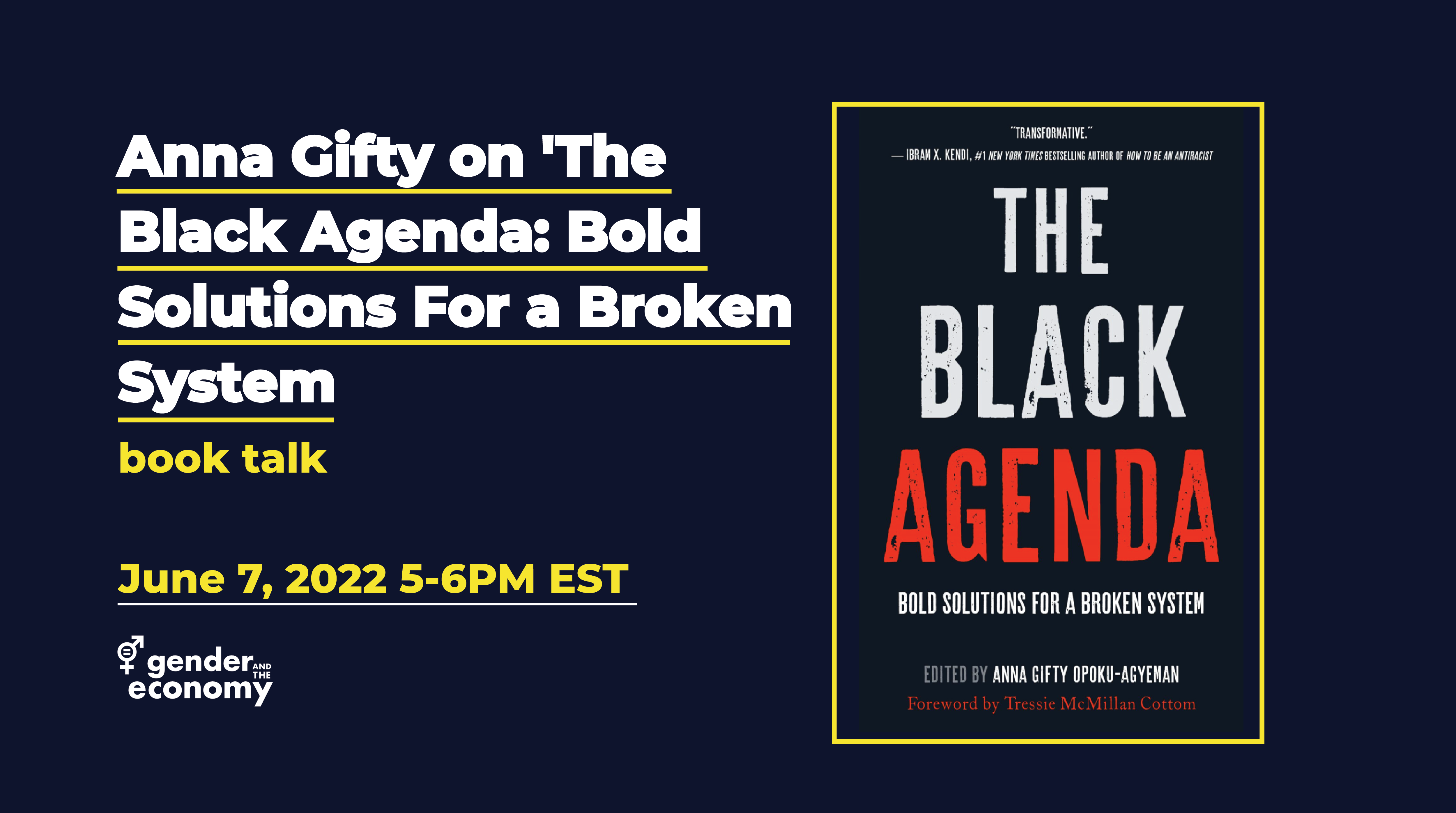
    Topic: The Black Agenda: Bold Solutions For a Broken System (St. Martin’s Press, February 2022)

    GATE Faculty Research Fellow Sonia Kang recently hosted a thought-provoking conversation with Anna Gifty Opoku-Agyeman, an award-winning Ghanaian-American researcher, entrepreneur, and author. Anna’s new book, The Black Agenda: Bold Solutions for a Broken System, is a profound collection of essays featuring Black scholars and experts on the subjects of mental health, artificial intelligence, climate change, the future of work, the LGBTQ+ community, criminal justice and more.

    Anna revealed the inspiration behind her book and shared what she learned from collaborating with over 34 Black scholars and experts. Dispelling the myth that there aren’t many Black voices in scholarship, she emphasized the plentiful examples in her book of Black researchers from fields such as education, healthcare, climate change, and technology who have all been at the forefront of advocating for meaningful changes.

    “The key I want you to take away from this book is that the best outcome for Black people is always a better outcome for everyone else.”

    – Anna Gifty Opoku-Agyeman 

    The conversation highlighted the importance of tackling systemic issues through the lens of race and equity. Anna argued that we must intentionally seek to understand how marginalized communities, especially Black and Indigenous women and non-binary people, are disproportionally impacted by pressing social and environmental challenges such as climate change. To find solutions and enact lasting and meaningful change rooted in racial justice, it’s imperative to center marginalized communities and their experiences and to understand how they will be affected by proposed solutions and policies.

    Watch Anna Gifty Opoku-Agyeman discuss the importance of understanding social issues through the lens of race and equity.

    [/fusion_text][fusion_separator style_type=”none” hide_on_mobile=”small-visibility,medium-visibility,large-visibility” class=”” id=”” sep_color=”” top_margin=”20″ bottom_margin=”20″ border_size=”” icon=”” icon_circle=”” icon_circle_color=”” width=”” alignment=”center” /][fusion_button link=”https://www.gendereconomy.org/events/” text_transform=”” title=”” target=”_blank” link_attributes=”” alignment=”” modal=”” hide_on_mobile=”small-visibility,medium-visibility,large-visibility” class=”” id=”” color=”custom” button_gradient_top_color=”#62bd19″ button_gradient_bottom_color=”#62bd19″ button_gradient_top_color_hover=”#00c2e2″ button_gradient_bottom_color_hover=”#00c2e2″ accent_color=”” accent_hover_color=”” type=”” bevel_color=”” size=”” stretch=”yes” icon=”” icon_position=”left” icon_divider=”no” animation_type=”” animation_direction=”left” animation_speed=”0.3″ animation_offset=””]See more events[/fusion_button][/fusion_builder_column][/fusion_builder_row][/fusion_builder_container]

  • Your Computer is On Fire  – GA:P Event Series

    Your Computer is On Fire – GA:P Event Series

    [fusion_builder_container hundred_percent=”no” equal_height_columns=”no” hide_on_mobile=”small-visibility,medium-visibility,large-visibility” background_position=”center center” background_repeat=”no-repeat” fade=”no” background_parallax=”none” parallax_speed=”0.3″ video_aspect_ratio=”16:9″ video_loop=”yes” video_mute=”yes” border_style=”solid” type=”legacy”][fusion_builder_row][fusion_builder_column type=”1_1″ layout=”1_1″ background_position=”left top” border_style=”solid” border_position=”all” spacing=”yes” background_repeat=”no-repeat” margin_top=”0px” margin_bottom=”0px” animation_speed=”0.3″ animation_direction=”left” hide_on_mobile=”small-visibility,medium-visibility,large-visibility” center_content=”no” last=”true” hover_type=”none” first=”true” min_height=”” link=”” background_blend_mode=”overlay”][fusion_text columns=”” column_min_width=”” column_spacing=”” rule_style=”” rule_size=”” rule_color=”” hue=”” saturation=”” lightness=”” alpha=”” content_alignment_medium=”” content_alignment_small=”” content_alignment=”” hide_on_mobile=”small-visibility,medium-visibility,large-visibility” sticky_display=”normal,sticky” class=”” id=”” margin_top=”” margin_right=”” margin_bottom=”” margin_left=”” fusion_font_family_text_font=”” fusion_font_variant_text_font=”” font_size=”” line_height=”” letter_spacing=”” text_transform=”none” text_color=”” animation_type=”” animation_direction=”left” animation_speed=”0.3″ animation_offset=””]

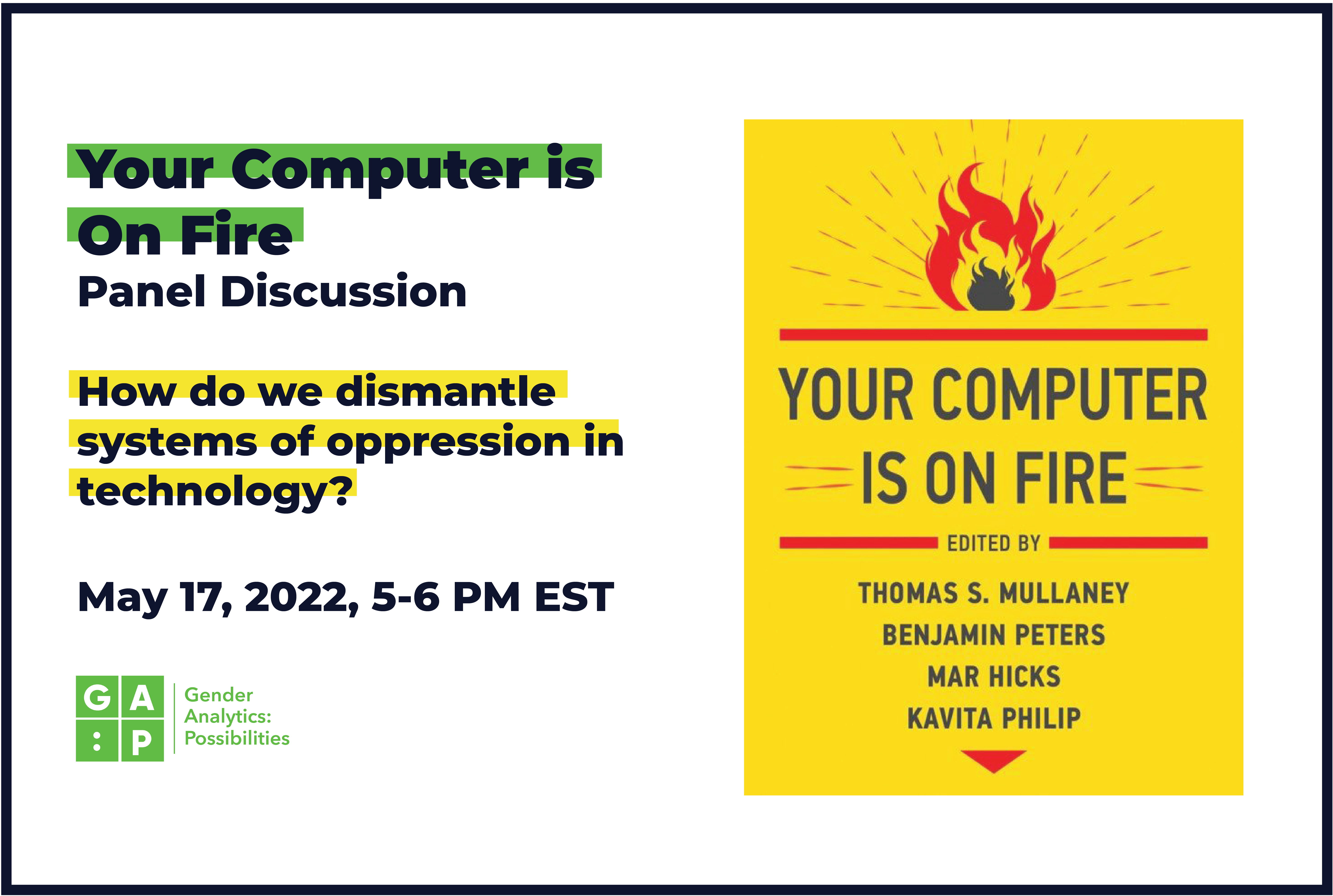
    Topic: Your Computer is On Fire (The MIT Press, 2021): How do we dismantle systems of oppression in technology?

    As part of the Gender Analytics: Possibilities (GA: P) event series, GATE Director Sarah Kaplan moderated a panel discussion with contributors from the book Your Computer is On Fire (The MIT Press, 2021), including Janet Abbate (Professor of Science, Technology, and Society at Virginia Tech), Kavita Philip, (Professor of English and President’s Excellence Chair in Network Cultures, University of British Columbia), and Sreela Sarkar (Associate Professor, Department of Communication, Santa Clara University).

    The panel shared examples from the book about how inequality, marginalization, and biases are woven into our technological systems and how these problems are often misunderstood or ignored.

    One example the panel highlighted is the pervasive myth of meritocracy and the complacency it creates about diversity and fairness in workplaces. People often believe that fields like tech are built on meritocracy, and those who are deserving will find their way into these spaces. However, the panelists argued that often when we are measuring merit, we are only measuring the cumulative advantages that someone has had over their life. This could be colleges they went to, pre-existing institutional or cultural connections, and in some cases belonging to the right families or access to the right capital. The myth of meritocracy covers up the way tech industry favors those who have been afforded privileges in their lives, and in doing so casts aside those who haven’t.

    The panelists also spoke about the business case for diversity in the tech industry, which is used as an argument to increase representation in the workplace as it benefits companies financially. While the business case is important, the speakers argued that if the discussion solely focuses on increasing profits as the reason for diversity, the unspoken flipside of the argument is that “exclusion is acceptable, as long as it doesn’t affect the bottom line.” Therefore, the speakers emphasized the importance of demanding equity and justice in workplaces.

    “Of course it (AI) gives us incredible ability to crunch massive amounts of data. But what we’re doing that’s so misguided is that we’re trying to shape human thinking to mimic the forms of automation that we want to implement. And that’s where we lose the rich stories that all these chapters are telling us.”

    – Kavita Philip

    Watch our panel of experts discuss their reflections from the book

    The authors are also happy to announce that a portion of royalties from sales of the book has been pledged to the MIT Press Fund for Diverse Voices.


    GA:P logo

    The Gender Analytics: Possibilities (GA:P) Event Series is an exciting multi-session online series. This unique online experience will highlight how emerging areas of analytics applied to issues around diversity and gender shape risks and opportunities for many organizations, operations and outcomes. Experts in data analytics, gender, and diversity, and inclusion more broadly will share their research and insights to an audience of business, academic, and government leaders.

    The GA:P Event Series is being planned jointly by two Rotman research centers, the Institute for Gender and the Economy (GATE) and TD Management Data and Analytics Lab co-organized by Susan Christoffersen (Co-Academic Director, TD MDAL), Sarah Kaplan (Director, GATE) and Matt Mitchell (Co-Academic Director, TD MDAL)

    [/fusion_text][fusion_separator style_type=”none” hide_on_mobile=”small-visibility,medium-visibility,large-visibility” top_margin=”20″ bottom_margin=”20″ alignment=”center” /][fusion_button link=”https://www.gendereconomy.org/events/” target=”_blank” hide_on_mobile=”small-visibility,medium-visibility,large-visibility” color=”custom” button_gradient_top_color=”#62bd19″ button_gradient_bottom_color=”#62bd19″ button_gradient_top_color_hover=”#00c2e2″ button_gradient_bottom_color_hover=”#00c2e2″ stretch=”yes” icon_position=”left” icon_divider=”no” animation_direction=”left” animation_speed=”0.3″]See more events[/fusion_button][/fusion_builder_column][/fusion_builder_row][/fusion_builder_container]
  • The End of Bias: A Beginning: The Science and Practice of Overcoming Unconscious Bias

    The End of Bias: A Beginning: The Science and Practice of Overcoming Unconscious Bias

    [fusion_builder_container hundred_percent=”no” equal_height_columns=”no” menu_anchor=”” hide_on_mobile=”small-visibility,medium-visibility,large-visibility” class=”” id=”” background_color=”” background_image=”” background_position=”center center” background_repeat=”no-repeat” fade=”no” background_parallax=”none” parallax_speed=”0.3″ video_mp4=”” video_webm=”” video_ogv=”” video_url=”” video_aspect_ratio=”16:9″ video_loop=”yes” video_mute=”yes” overlay_color=”” video_preview_image=”” border_color=”” border_style=”solid” padding_top=”” padding_bottom=”” padding_left=”” padding_right=”” type=”legacy”][fusion_builder_row][fusion_builder_column type=”1_1″ layout=”1_1″ background_position=”left top” background_color=”” border_color=”” border_style=”solid” border_position=”all” spacing=”yes” background_image=”” background_repeat=”no-repeat” padding_top=”” padding_right=”” padding_bottom=”” padding_left=”” margin_top=”0px” margin_bottom=”0px” class=”” id=”” animation_type=”” animation_speed=”0.3″ animation_direction=”left” hide_on_mobile=”small-visibility,medium-visibility,large-visibility” center_content=”no” last=”true” min_height=”” hover_type=”none” link=”” first=”true” border_sizes_top=”” border_sizes_bottom=”” border_sizes_left=”” border_sizes_right=””][fusion_text columns=”” column_min_width=”” column_spacing=”” rule_style=”” rule_size=”” rule_color=”” hue=”” saturation=”” lightness=”” alpha=”” content_alignment_medium=”” content_alignment_small=”” content_alignment=”” hide_on_mobile=”small-visibility,medium-visibility,large-visibility” sticky_display=”normal,sticky” class=”” id=”” margin_top=”” margin_right=”” margin_bottom=”” margin_left=”” fusion_font_family_text_font=”” fusion_font_variant_text_font=”” font_size=”” line_height=”” letter_spacing=”” text_transform=”none” text_color=”” animation_type=”” animation_direction=”left” animation_speed=”0.3″ animation_offset=””]

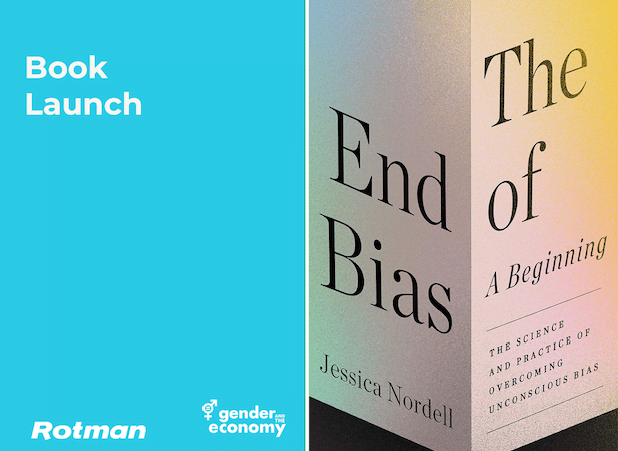
    Topic: The End of Bias: A Beginning: The Science and Practice of Overcoming Unconscious Bias (Metropolitan Books, Sept. 21 2021)

    GATE Faculty Teaching Fellow Nouman Ashraf and author Jessica Nordell discussed how to overcome the unconscious biases that exist around us. Jessica shared some of the gripping stories from her book The End of Bias: A Beginning: The Science and Practice of Overcoming Unconscious Bias,  and offered research insights about what we can do to eradicate discrimination.

    Unconscious bias can be seen in medicine, education, policing, and other workplaces, and can have corrosive and even lethal effects. Jessica highlighted how simply diversifying workplaces is not enough to counteract biases and that more diverse workplaces do not necessarily mean more productive workplaces.The discussion highlighted that tackling unfairness is the key to creating an inclusive environment. Creating diverse teams can benefit organizations but these benefits can only be achieved when organizations are inclusive. When employees feel that they aren’t being treated well and that organizational practices are fundamentally unfair, their engagement and commitment to the workplace decreases. When they don’t feel psychologically safe in their workplace, they withdraw. To create a thriving workplace culture, it’s important to address the unfairness that bias can create.

    “Tackling bias is essential to creating trusting relationships with other people. That’s one of the most gratifying things that can happen to anyone who is working on their own bias. It opens up the door for meaningful relationships across differences that weren’t possible before.” 

    – Jessica Nordell 

    Watch Jessica Nordell discuss how we can tackle unfairness and bias in the workplace

    [/fusion_text][fusion_separator style_type=”none” hide_on_mobile=”small-visibility,medium-visibility,large-visibility” class=”” id=”” sep_color=”” top_margin=”20″ bottom_margin=”20″ border_size=”” icon=”” icon_circle=”” icon_circle_color=”” width=”” alignment=”center” /][fusion_button link=”https://www.gendereconomy.org/events/” text_transform=”” title=”” target=”_blank” link_attributes=”” alignment=”” modal=”” hide_on_mobile=”small-visibility,medium-visibility,large-visibility” class=”” id=”” color=”custom” button_gradient_top_color=”#62bd19″ button_gradient_bottom_color=”#62bd19″ button_gradient_top_color_hover=”#00c2e2″ button_gradient_bottom_color_hover=”#00c2e2″ accent_color=”” accent_hover_color=”” type=”” bevel_color=”” size=”” stretch=”yes” icon=”” icon_position=”left” icon_divider=”no” animation_type=”” animation_direction=”left” animation_speed=”0.3″ animation_offset=””]See more events[/fusion_button][/fusion_builder_column][/fusion_builder_row][/fusion_builder_container]