Category: Case Studies

  • MiCrédito: Designing microfinance products for first-time women entrepreneurs in Nicaragua

    MiCrédito: Designing microfinance products for first-time women entrepreneurs in Nicaragua


    Overview 

    This case study examines how Mujer Emprende, a microcredit product developed by MiCredito uses innovative features to de-risk ‘risky’ clients and maintain profitability, all while supporting women led businesses.

    Introduction 

    Nicaragua’s political and economic challenges and vulnerability to natural disasters have constrained economic growth and financial inclusion in the country. In 2021, only 26% of adults over 15 years of age had an account at a financial institution or through a mobile money provider.1 Moreover, with 22% female account ownership compared to 31% male account ownership, there is a clear gender gap in access to financial products and services in Nicaragua.2  

    On the other hand, the Nicaraguan economy has shown resilience, and the country’s GDP grew by 3.8% in 2022, driven by robust private consumption fueled by remittances and net exports.3 This presents a massive opportunity and responsibility for microfinance institutions (MFI) to create financial products and services for 74% of the Nicaraguan adult population that remains unbanked. 

    MiCrédito is a Nicaragua-based MFI founded in 2004 by Veronica Herrara and Octavio Cortez with support from Canada-based Mennonite Economic Development Associates (MEDA). MiCrédito’s mission is “to create business solutions that include both social and financial support to Micro and Small Entrepreneurs, providing for a more prosperous future.”4 The MFI provides small business loans, student loans, home improvement loans, life insurance, and other products to both urban and rural clients in Nicaragua and has expanded to Costa Rica. To expand both its financial portfolio and social impact, the organization looks to develop new financial products to improve reach among the unbanked, rural, and female populations.

    To view and download the full case study, follow these instructions.

    This case is accompanied by a video supplement which can be viewed below:

    This case was written by Corrina Vali for the BMO GATE MBA Fellowship Program. The author prepared this case under the supervision of Professor András Tilcsik with guidance from Professor Maja Djikic, Teddy Lusted, Vanessa Iarocci, Chimere Ibecheozor, Professor Sarah Kaplan, Professor Yongah Kim, and Matthew Stevens. The author wishes to thank Veronica Herrara, Lyann Urbina, Serge LeVert-Chiasson, Cesia Calderon, Jessica Villanueva, Martha Gallegos and Carmen Aviles for their participation in this project.

  • MEDA: Breaking the cycle of poverty by investing in entrepreneurs

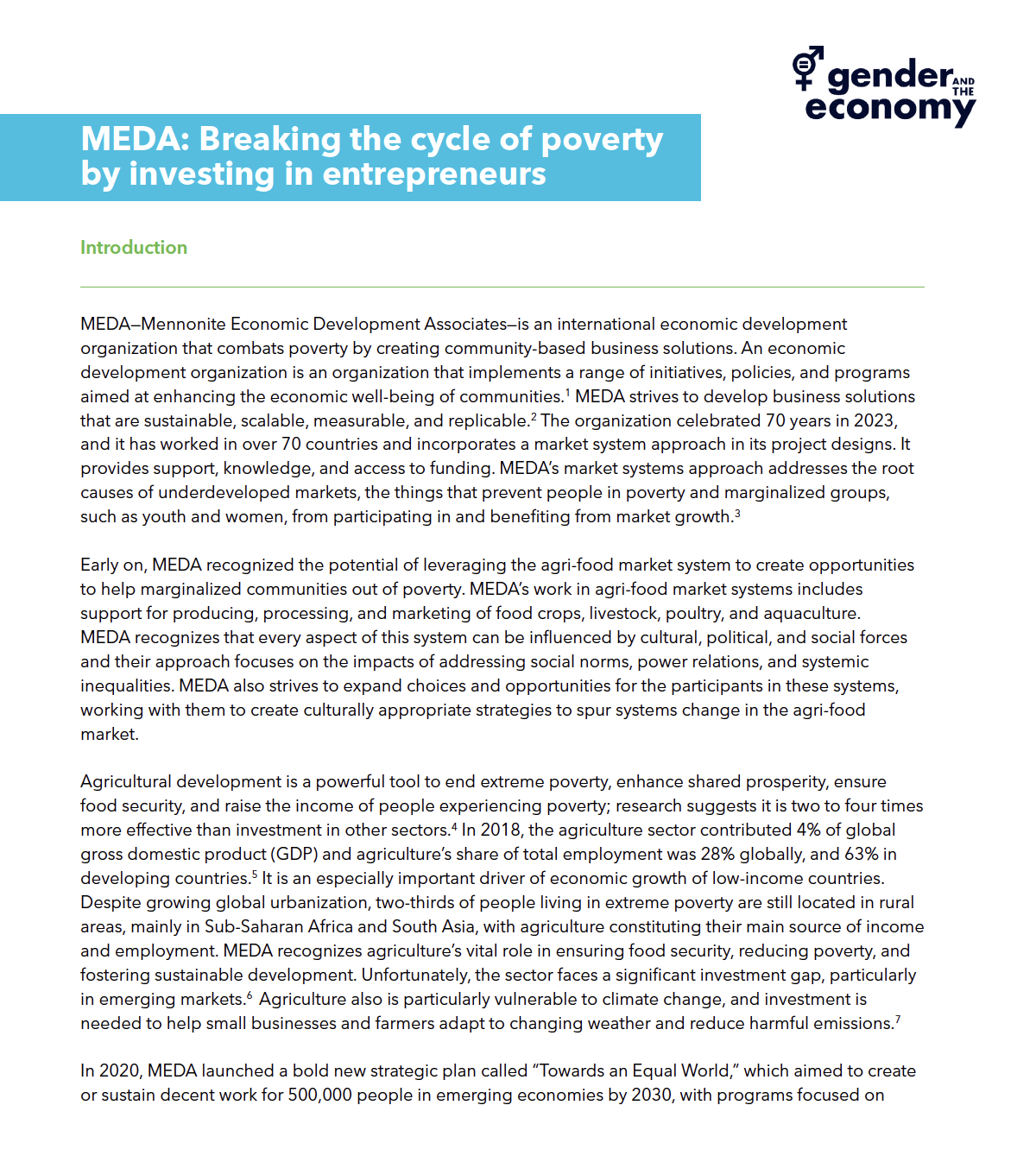
    MEDA: Breaking the cycle of poverty by investing in entrepreneurs


    Overview 

    MEDA, an international economic development organization, has consistently made efforts to prioritize shared voices, taking local contexts into account to create programs that promote equity and benefit the Global South. By involving local expertise, MEDA has worked to rectify inequitable systems, cater to the needs of the local stakeholders, and deliver effective programs.

    Course Topics: 

    • Gender-based analysis
    • Economic development
    • Entrepreneurship
    • Agri-food businesses

     Introduction 

    MEDA—is an international economic development organization that combats poverty by creating community-based business solutions . The organization celebrated 70 years in 2023, and it has worked in over 70 countries. MEDA incorporates a market systems approach that addresses the root causes of underdeveloped markets, especially the things that prevent people in poverty and marginalized groups, such as youth and women, from participating in and benefiting from market growth.

    Early on, MEDA recognized the potential of leveraging the agri-food market system to create opportunities to help marginalized communities out of poverty. In developing countries in particular, agricultural development is a powerful tool to end extreme poverty. MEDA has been at the forefront of providing ongoing support for producing, processing, and marketing of food crops, livestock, poultry, and aquaculture. MEDA’s approach acknowledges that every aspect of the business system can be influenced by cultural, political, and social forces and their approach focuses on the impacts of addressing social norms, power relations, and systemic inequalities. MEDA also strives to expand choices and opportunities for the participants in these systems, working with them to create culturally appropriate strategies to spur systems change in the agri-food market.

    To view and download the full case study, follow these instructions.

    This case was written by Vania Sembiring. The author prepared this case under the supervision of Professors Sarah Kaplan and Hyeun Lee.

  • Reina: Breaking the Concrete Ceiling in Housing Development

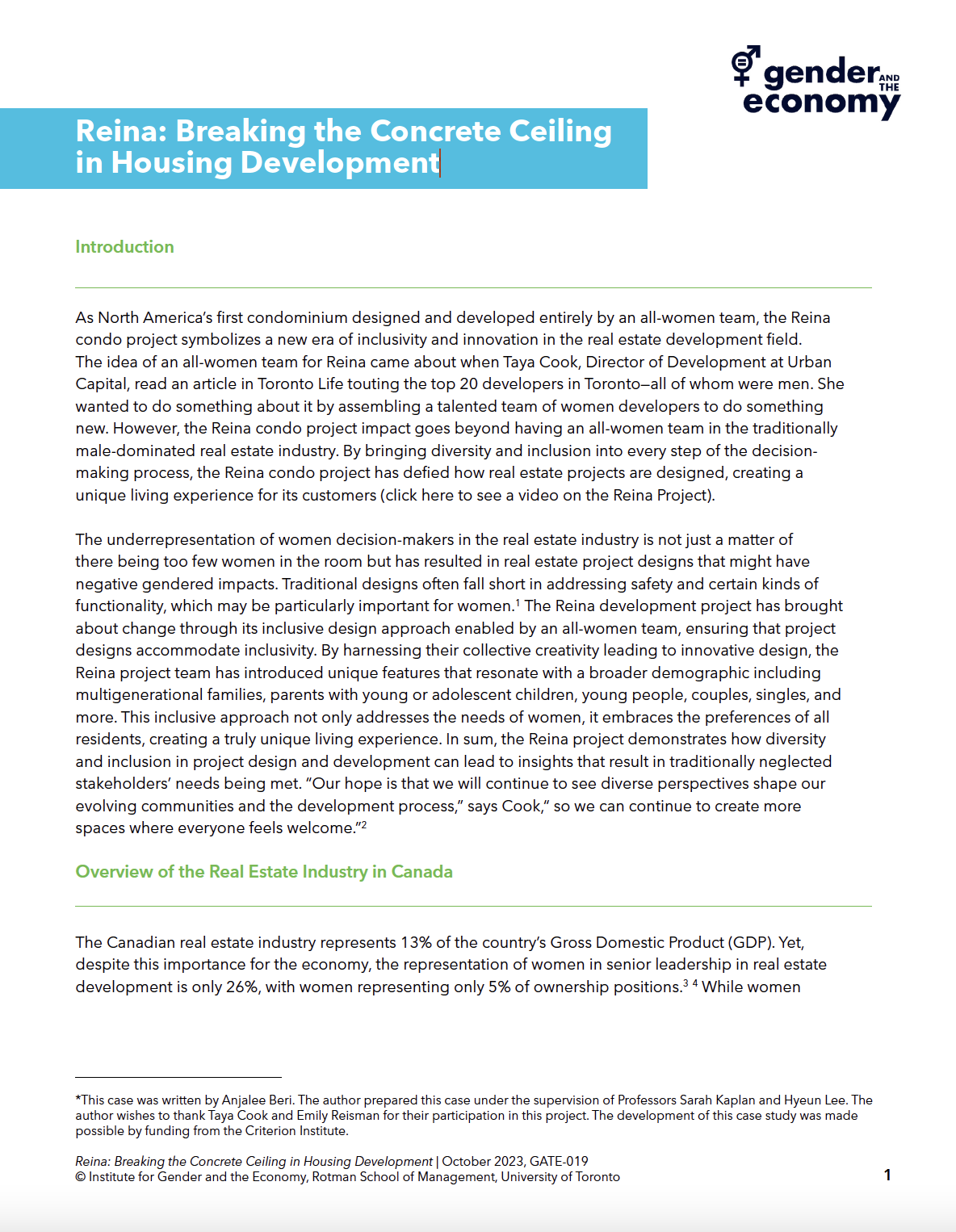
    Reina: Breaking the Concrete Ceiling in Housing Development


    Overview 

    The underrepresentation of women decision-makers in the real estate industry has resulted in real estate project designs that may have negative gendered impacts or may not serve all communities well. By bringing diversity and inclusion into every step of the decision-making process, the Reina condo project has reinvented how real estate projects are designed, creating a unique living experience for its customers. 

    Course Topics: 

    • Real estate 
    • Business design 
    • Diversity and inclusion 
    • Gender analysis 
    • Leadership 

     Introduction 

    As North America’s first condominium designed and developed entirely by an all-women team, Reina signifies a new era of inclusivity and innovation in the real estate development field. The concept of an all-women team for the Reina project came about when Taya Cook, Director of Development at Urban Capital, read an article in Toronto Life touting the top 20 developers in Toronto—all of whom were men. She wanted to do something about it by assembling a talented team of women developers, planners and designers to do something new.  

    The Reina condo project has brought about change through its inclusive design approach enabled by its all-women team, ensuring that the project design accommodates inclusivity. By incorporating lessons and insights from community engagement, the Reina project team has introduced unique features that resonate with a broader demographic including multigenerational families, parents with young or adolescent children, young people, couples, singles, and more. This inclusive approach not only addresses the needs of women, it embraces the preferences of all residents, creating a truly unique living experience. In sum, the Reina project demonstrates how diversity and inclusion in project design and development can lead to insights that result in traditionally neglected stakeholders’ needs being met.  

    To view and download the full case study, follow these instructions.

    This case was written by Anjalee Beri. The author prepared this case under the supervision of Professors Sarah Kaplan and Hyeun Lee.  

  • Knix Period Underwear: Navigating Growth in a Market Neglected by Venture Capital

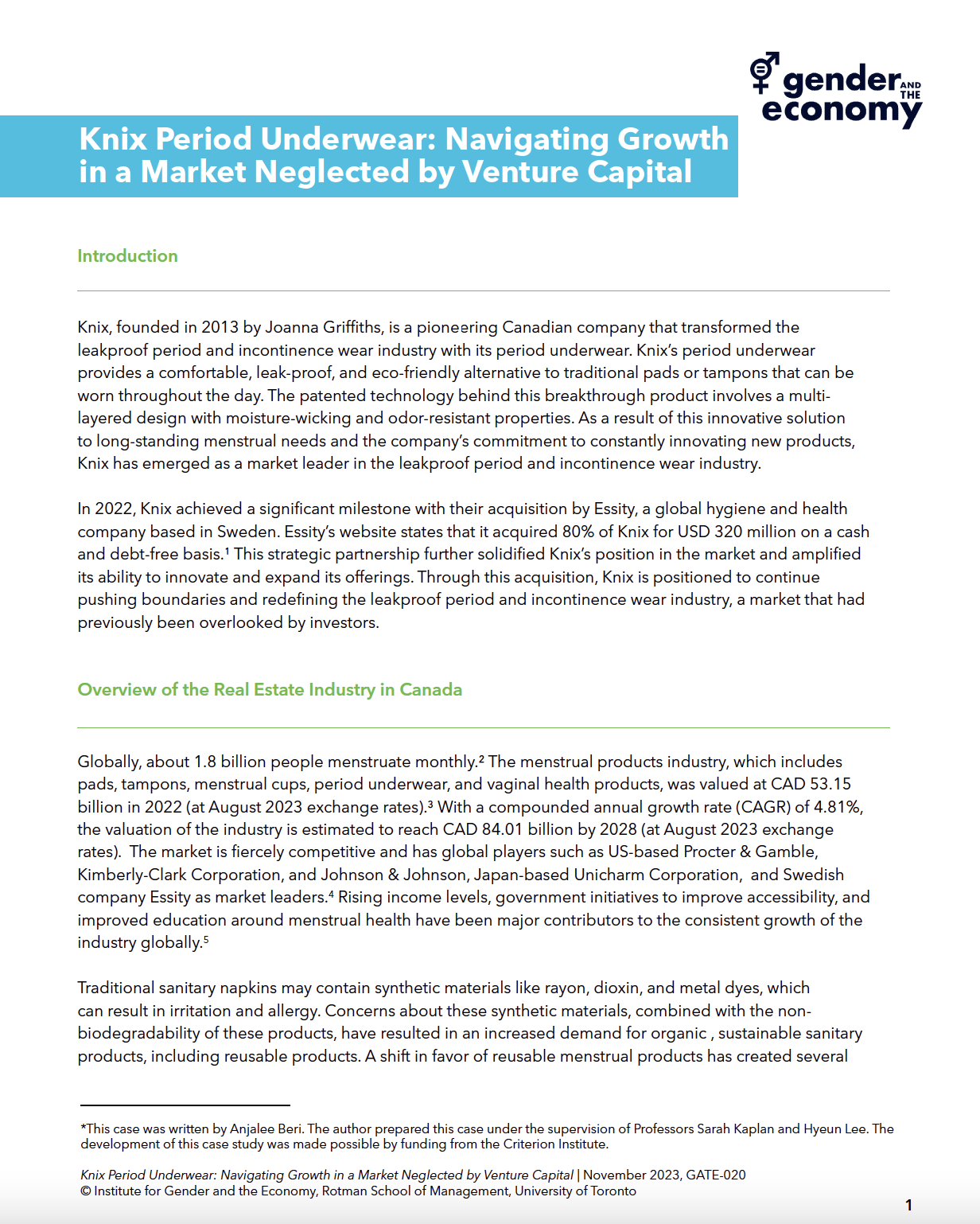
    Knix Period Underwear: Navigating Growth in a Market Neglected by Venture Capital


    Overview 

    This case study examines how Knix has been able to redefine the menstrual products industry and establish leadership in leakproof period and incontinence wear. Knix’s success urges us to examine how the shift towards a more inclusive, adaptive business model and the innovation of products that truly resonate with the customer base can build new market opportunities.  

    Course Topics: 

    • Gender-based analysis 
    • Entrepreneurship 
    • Product innovation 
    • Venture finance 

    Introduction 

    Knix, founded in 2013 by Joanna Griffiths, is a pioneering Canadian company that transformed the leakproof period and incontinence wear industry with its period underwear. Knix’s period underwear provides a comfortable, leak-proof, and eco-friendly alternative to traditional pads or tampons that can be worn throughout the day. The patented technology behind this breakthrough product involves a multi-layered design with moisture-wicking and odor-resistant properties. As a result of this innovative solution to long-standing menstrual needs and the company’s commitment to constantly innovating new products, Knix has emerged as a market leader in the leakproof period and incontinence wear industry.  

    In 2022, Knix achieved a significant milestone with their acquisition by Essity, a global hygiene and health company based in Sweden. for USD 320 million (for 80% ownership).  This strategic partnership further solidified Knix’s position in the market and amplified its ability to innovate and expand its offerings while also demonstrating the economic value of paying attention to markets that have been neglected by large consumer companies.  

    To view and download the full case study, follow these instructions.

    This case was written by Anjalee Beri. The author prepared this case under the supervision of Professors Sarah Kaplan and Hyeun Lee.  

  • Equilo: Unleashing the Power of Gender Equality and Social Inclusion Analysis

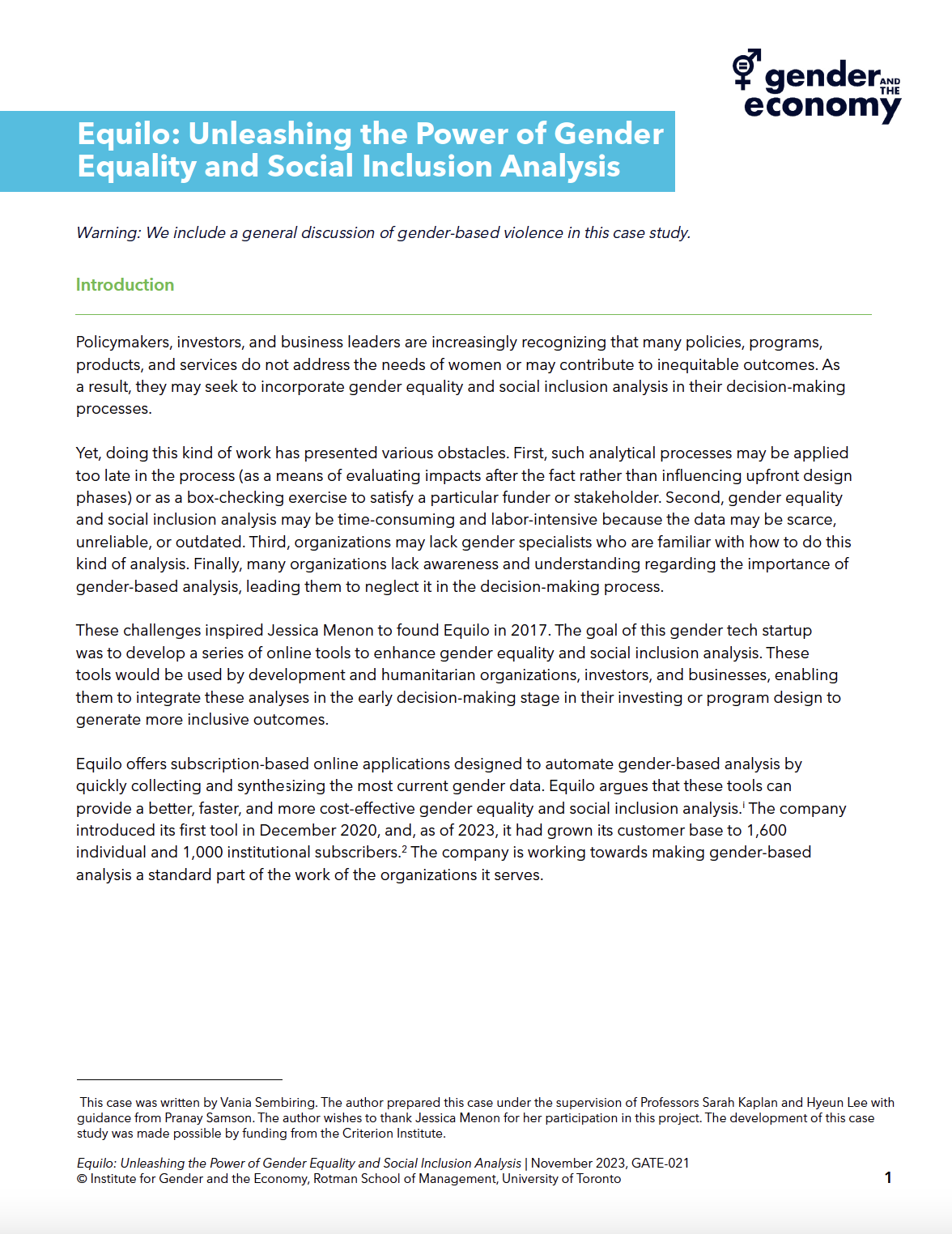
    Equilo: Unleashing the Power of Gender Equality and Social Inclusion Analysis


    Overview 

    There is an increasing awareness of the importance of gender equality and social inclusion analysis among policy makers, investors, and business leaders. However, due to the lack of organizational and individual resources, these analyses have often been sidelined. Equilo is a startup working to develop accessible, user-friendly tools to address and overcome these challenges. By enabling users to accelerate the use of gender equality and social inclusion analysis in their decision-making, Equilo is aiming to make a system-level impact and contribute to creating a more just world. 

    Course Topics: 

    • Gender analysis 
    • Gender lens investing 
    • Strategy 
    • Social enterprise 

    Introduction 

    Having observed various challenges associated with conducting gender equality and social inclusion analysis, Jessica Menon founded Equilo in 2017. The goal of this gender tech startup, which is a social enterprise, was to develop a series of online tools to enhance gender equality and social inclusion analysis. These tools would be used by development and humanitarian organizations, investors, and businesses, enabling them to integrate these analyses in the early decision-making stage in their investing or program design, aiming to generate more inclusive outcomes. 

    Equilo offers subscription-based online applications designed to automate gender-based analysis by quickly collecting and synthesizing the most current gender data. Equilo argues that these tools can offer a better, faster, and more cost-effective gender equality and social inclusion analysis.  The company introduced its first tool in December 2020, and, as of 2023, it had grown its customer base to 1,600 individual and 1,000 institutional subscribers. The company is working towards making gender-based analysis a standard part of the work of the organizations it serves. 

    To view and download the full case study, follow these instructions.

    This case was written by Vania Sembiring. The author prepared this case under the supervision of Professors Sarah Kaplan and Hyeun Lee with guidance from Pranay Samson.  

  • SheEO: A Transformative Paradigm for Entrepreneurial Funding

    SheEO: A Transformative Paradigm for Entrepreneurial Funding

    [fusion_builder_container hundred_percent=”no” equal_height_columns=”no” menu_anchor=”” hide_on_mobile=”small-visibility,medium-visibility,large-visibility” class=”” id=”” background_color=”” background_image=”” background_position=”center center” background_repeat=”no-repeat” fade=”no” background_parallax=”none” parallax_speed=”0.3″ video_mp4=”” video_webm=”” video_ogv=”” video_url=”” video_aspect_ratio=”16:9″ video_loop=”yes” video_mute=”yes” overlay_color=”” video_preview_image=”” border_color=”” border_style=”solid” padding_top=”” padding_bottom=”” padding_left=”” padding_right=”” type=”legacy”][fusion_builder_row][fusion_builder_column type=”1_1″ layout=”1_1″ background_position=”left top” background_color=”” border_color=”” border_style=”solid” border_position=”all” spacing=”yes” background_image=”” background_repeat=”no-repeat” padding_top=”” padding_right=”” padding_bottom=”” padding_left=”” margin_top=”0px” margin_bottom=”0px” class=”” id=”” animation_type=”” animation_speed=”0.3″ animation_direction=”left” hide_on_mobile=”small-visibility,medium-visibility,large-visibility” center_content=”no” last=”true” min_height=”” hover_type=”none” link=”” border_sizes_top=”” border_sizes_bottom=”” border_sizes_left=”” border_sizes_right=”” first=”true”][fusion_text columns=”” column_min_width=”” column_spacing=”” rule_style=”default” rule_size=”” rule_color=”” content_alignment_medium=”” content_alignment_small=”” content_alignment=”” hide_on_mobile=”small-visibility,medium-visibility,large-visibility” sticky_display=”normal,sticky” class=”” id=”” margin_top=”” margin_right=”” margin_bottom=”” margin_left=”” font_size=”” fusion_font_family_text_font=”” fusion_font_variant_text_font=”” line_height=”” letter_spacing=”” text_color=”” animation_type=”” animation_direction=”left” animation_speed=”0.3″ animation_offset=””]

    Overview

    Venture capital funding in the past has remained low for women-owned businesses. By fusing data, gender-based analysis, and their experiences as women into their innovative new way of supporting entrepreneurs this case study details how SheEO has created a new and innovative model of venture capital funding that focuses on women and non-binary entrepreneurs. 

    Course Topics:
    • Business design 
    • Innovation 
    • Social enterprise/entrepreneurship 

    Introduction:

    In response to gender inequities in venture capital funding, there has been a rise of alternative networks of angel groups, accelerators, and networking organizations that focus on businesses led by women and non-binary people, and SheEO has been at the forefront of the movement. SheEO is a new kind of innovation accelerator. It was officially launched in 2015 in Canada with a goal to provide an ecosystem in which businesses led by women and non-binary people could thrive. Fed up with the masculinized Silicon Valley model of entrepreneurship, founder Vicki Saunders sought to turn the system on its head: “We need to actually create a process that allows people to find their own way, feel comfortable in their own skin and to build a business the way they want to, not the way the system tells them they should be doing it …[because] a lot of our business models are broken, a lot of the ways that we are approaching business don’t work.”[i]

    Instead of trying to fit women into the existing approaches to entrepreneurial funding which have been shown to exclude women and other marginalized people, SheEO has been building a visionary model that focuses on women and non-binary entrepreneurs to shape their own growth trajectories. As of 2021, SheEO has expanded to the US, Australia, New Zealand and the UK, and has helped 107 Ventures with more than $10 million (CAD) of funding raised by a group of Activators around the world, who contribute as investors, advisors, mentors, and customers of the Ventures.  

    SheNative Thumbnail

    View and download the full case study.

    [/fusion_text][fusion_text columns=”” column_min_width=”” column_spacing=”” rule_style=”default” rule_size=”” rule_color=”” content_alignment_medium=”” content_alignment_small=”” content_alignment=”” hide_on_mobile=”small-visibility,medium-visibility,large-visibility” sticky_display=”normal,sticky” class=”” id=”” margin_top=”” margin_right=”” margin_bottom=”” margin_left=”” font_size=”” fusion_font_family_text_font=”” fusion_font_variant_text_font=”” line_height=”” letter_spacing=”” text_color=”” animation_type=”” animation_direction=”left” animation_speed=”0.3″ animation_offset=””]

    __________________________

    This case was written by:

    Hyeun Lee and Sarah Kaplan.

    [/fusion_text][fusion_separator style_type=”none” hide_on_mobile=”small-visibility,medium-visibility,large-visibility” sticky_display=”normal,sticky” class=”” id=”” flex_grow=”0″ top_margin=”10″ bottom_margin=”10″ width=”” alignment=”center” border_size=”” sep_color=”” icon=”” icon_size=”” icon_color=”” icon_circle=”” icon_circle_color=”” /][fusion_button link=”https://www.gendereconomy.org/education/case-studies/” text_transform=”” title=”” target=”_blank” link_attributes=”” alignment_medium=”” alignment_small=”” alignment=”” modal=”” hide_on_mobile=”small-visibility,medium-visibility,large-visibility” sticky_display=”normal,sticky” class=”” id=”” color=”custom” button_gradient_top_color=”#62bd19″ button_gradient_bottom_color=”#62bd19″ button_gradient_top_color_hover=”#00c2e2″ button_gradient_bottom_color_hover=”#00c2e2″ accent_color=”” accent_hover_color=”” type=”” bevel_color=”” border_width=”” border_radius=”” border_color=”” border_hover_color=”” size=”” stretch=”yes” margin_top=”” margin_right=”” margin_bottom=”” margin_left=”” icon=”” icon_position=”left” icon_divider=”no” animation_type=”” animation_direction=”left” animation_speed=”0.3″ animation_offset=””]See more case studies[/fusion_button][fusion_separator style_type=”none” hide_on_mobile=”small-visibility,medium-visibility,large-visibility” sticky_display=”normal,sticky” class=”” id=”” flex_grow=”0″ top_margin=”20″ bottom_margin=”20″ width=”” alignment=”center” border_size=”” sep_color=”” icon=”” icon_size=”” icon_color=”” icon_circle=”” icon_circle_color=”” /][fusion_recent_posts layout=”default” picture_size=”fixed” hover_type=”none” columns=”3″ number_posts=”3″ post_status=”” offset=”0″ pull_by=”category” cat_slug=”case-studies” exclude_cats=”” tag_slug=”” exclude_tags=”” thumbnail=”yes” title=”yes” meta=”no” meta_author=”no” meta_categories=”no” meta_date=”yes” meta_comments=”yes” meta_tags=”no” content_alignment=”” excerpt=”no” excerpt_length=”35″ strip_html=”yes” scrolling=”no” hide_on_mobile=”small-visibility,medium-visibility,large-visibility” class=”” id=”” animation_type=”” animation_direction=”left” animation_speed=”0.3″ animation_offset=”” /][/fusion_builder_column][/fusion_builder_row][/fusion_builder_container]

  • SheNative: Fostering community and supporting Indigenous women

    SheNative: Fostering community and supporting Indigenous women

    [fusion_builder_container hundred_percent=”no” equal_height_columns=”no” menu_anchor=”” hide_on_mobile=”small-visibility,medium-visibility,large-visibility” class=”” id=”” background_color=”” background_image=”” background_position=”center center” background_repeat=”no-repeat” fade=”no” background_parallax=”none” parallax_speed=”0.3″ video_mp4=”” video_webm=”” video_ogv=”” video_url=”” video_aspect_ratio=”16:9″ video_loop=”yes” video_mute=”yes” overlay_color=”” video_preview_image=”” border_color=”” border_style=”solid” padding_top=”” padding_bottom=”” padding_left=”” padding_right=”” type=”legacy”][fusion_builder_row][fusion_builder_column type=”1_1″ layout=”1_1″ background_position=”left top” background_color=”” border_color=”” border_style=”solid” border_position=”all” spacing=”yes” background_image=”” background_repeat=”no-repeat” padding_top=”” padding_right=”” padding_bottom=”” padding_left=”” margin_top=”0px” margin_bottom=”0px” class=”” id=”” animation_type=”” animation_speed=”0.3″ animation_direction=”left” hide_on_mobile=”small-visibility,medium-visibility,large-visibility” center_content=”no” last=”true” min_height=”” hover_type=”none” link=”” border_sizes_top=”” border_sizes_bottom=”” border_sizes_left=”” border_sizes_right=”” first=”true”][fusion_text columns=”” column_min_width=”” column_spacing=”” rule_style=”” rule_size=”” rule_color=”” hue=”” saturation=”” lightness=”” alpha=”” content_alignment_medium=”” content_alignment_small=”” content_alignment=”” hide_on_mobile=”small-visibility,medium-visibility,large-visibility” sticky_display=”normal,sticky” class=”” id=”” margin_top=”” margin_right=”” margin_bottom=”” margin_left=”” fusion_font_family_text_font=”” fusion_font_variant_text_font=”” font_size=”” line_height=”” letter_spacing=”” text_transform=”” text_color=”” animation_type=”” animation_direction=”left” animation_color=”” animation_speed=”0.3″ animation_delay=”0″ animation_offset=”” logics=””]Overview

    Devon Fiddler created SheNative, an Indigenous and women-founded leather goods and apparel social enterprise, with a mission to empower and elevate Indigenous women. This case study details how SheNative achieves its mission, such as by using a community-based design process and considering people and the planet in all of its decision making.   

    Course Topics:
    • Business design 
    • Indigenous entrepreneurship 
    • Innovation 
    • Social enterprise/entrepreneurship 
    • Supply chain management 

    Introduction:

    Before she knew what product she wanted to produce and sell, Devon Fiddler—founder and Chief Executive Officer of SheNative—knew she wanted to start a business built around the vision of women supporting women. Everything from the company’s mission to its products and employment practices would be created with this vision in mind. For the past 6 years, Fiddler and her team at SheNative, an Indigenous and female-founded company, have successfully achieved this goal and more through a strategy centred around social impact.  

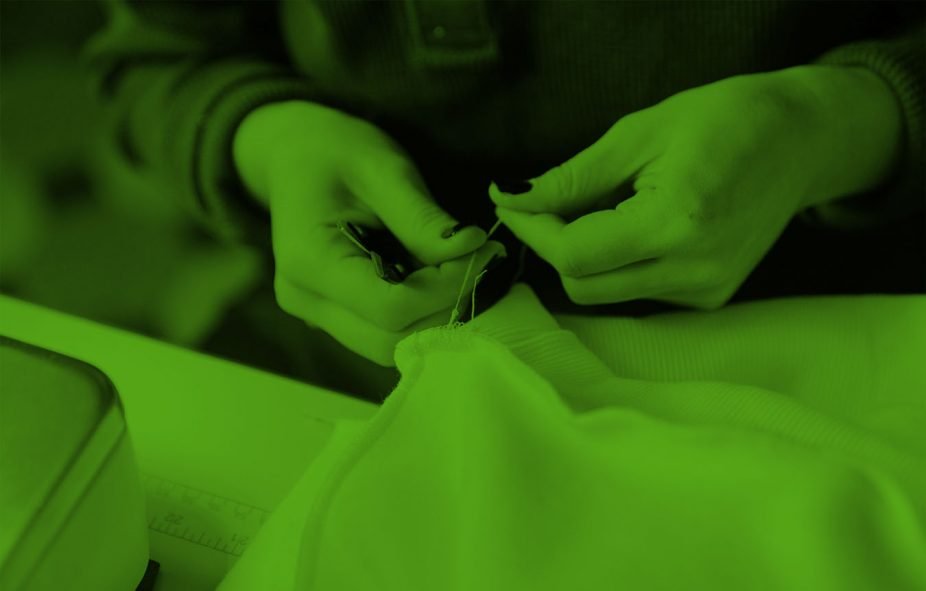
    Based in Saskatoon, Saskatchewan, SheNative is a women’s leather goods and apparel social enterprise launched in 2015. Fiddler started the company after beginning her professional career in 2011 as a business development coordinator advising First Nations entrepreneurs. In this role, Fiddler worked in Northern Saskatchewan with Meadow Lake Tribal Council “to promote entrepreneurship, and guide First Nations entrepreneurs to resources to help them build small businesses.” Through this work, helping others begin their entrepreneurial journey, Fiddler became inspired to become an entrepreneur herself. Having only the vision of her company in mind—women supporting women—Fiddler worked with a product-development consultant to assess what product would be the best match. She ultimately chose to create a “fashion lifestyle brand” selling leather accessories and clothing for women because of her life-long love of fashion and past dreams of becoming a designer.  

    SheNative Thumbnail

    View and download the full case study.

    [/fusion_text][fusion_text columns=”” column_min_width=”” column_spacing=”” rule_style=”default” rule_size=”” rule_color=”” content_alignment_medium=”” content_alignment_small=”” content_alignment=”” hide_on_mobile=”small-visibility,medium-visibility,large-visibility” sticky_display=”normal,sticky” class=”” id=”” margin_top=”” margin_right=”” margin_bottom=”” margin_left=”” font_size=”” fusion_font_family_text_font=”” fusion_font_variant_text_font=”” line_height=”” letter_spacing=”” text_color=”” animation_type=”” animation_direction=”left” animation_speed=”0.3″ animation_offset=””]

    __________________________

    This case was written by:

    This case was written by Victoria Sahagian and Ana Baseio. The authors prepared this case under the supervision of Professor Sarah Kaplan, with guidance from Alyson Colón, Bonnie Lam and Vanessa Serra Iarocci and research assistance from Carmina Ravanera and Riley Yesno. The authors are grateful for the participation Devon Fiddler in this project.

    [/fusion_text][fusion_separator style_type=”none” hide_on_mobile=”small-visibility,medium-visibility,large-visibility” sticky_display=”normal,sticky” class=”” id=”” flex_grow=”0″ top_margin=”10″ bottom_margin=”10″ width=”” alignment=”center” border_size=”” sep_color=”” icon=”” icon_size=”” icon_color=”” icon_circle=”” icon_circle_color=”” /][fusion_button link=”https://www.gendereconomy.org/education/case-studies/” text_transform=”” title=”” target=”_blank” link_attributes=”” alignment_medium=”” alignment_small=”” alignment=”” modal=”” hide_on_mobile=”small-visibility,medium-visibility,large-visibility” sticky_display=”normal,sticky” class=”” id=”” color=”custom” button_gradient_top_color=”#62bd19″ button_gradient_bottom_color=”#62bd19″ button_gradient_top_color_hover=”#00c2e2″ button_gradient_bottom_color_hover=”#00c2e2″ accent_color=”” accent_hover_color=”” type=”” bevel_color=”” border_color=”” border_hover_color=”” size=”” stretch=”yes” margin_top=”” margin_right=”” margin_bottom=”” margin_left=”” icon=”” icon_position=”left” icon_divider=”no” animation_type=”” animation_direction=”left” animation_speed=”0.3″ animation_offset=””]See more case studies[/fusion_button][fusion_separator style_type=”none” hide_on_mobile=”small-visibility,medium-visibility,large-visibility” sticky_display=”normal,sticky” class=”” id=”” flex_grow=”0″ top_margin=”20″ bottom_margin=”20″ width=”” alignment=”center” border_size=”” sep_color=”” icon=”” icon_size=”” icon_color=”” icon_circle=”” icon_circle_color=”” /][fusion_recent_posts layout=”default” picture_size=”fixed” hover_type=”none” columns=”3″ number_posts=”3″ post_status=”” offset=”0″ pull_by=”category” cat_slug=”case-studies” exclude_cats=”” tag_slug=”” exclude_tags=”” thumbnail=”yes” title=”yes” meta=”no” meta_author=”no” meta_categories=”no” meta_date=”yes” meta_comments=”yes” meta_tags=”no” content_alignment=”” excerpt=”no” excerpt_length=”35″ strip_html=”yes” scrolling=”no” hide_on_mobile=”small-visibility,medium-visibility,large-visibility” class=”” id=”” animation_type=”” animation_direction=”left” animation_speed=”0.3″ animation_offset=”” /][/fusion_builder_column][/fusion_builder_row][/fusion_builder_container]

  • Cheekbone Beauty: A social enterprise making a difference for Indigenous youth

    Cheekbone Beauty: A social enterprise making a difference for Indigenous youth

    [fusion_builder_container hundred_percent=”no” equal_height_columns=”no” menu_anchor=”” hide_on_mobile=”small-visibility,medium-visibility,large-visibility” class=”” id=”” background_color=”” background_image=”” background_position=”center center” background_repeat=”no-repeat” fade=”no” background_parallax=”none” parallax_speed=”0.3″ video_mp4=”” video_webm=”” video_ogv=”” video_url=”” video_aspect_ratio=”16:9″ video_loop=”yes” video_mute=”yes” overlay_color=”” video_preview_image=”” border_color=”” border_style=”solid” padding_top=”” padding_bottom=”” padding_left=”” padding_right=”” type=”legacy”][fusion_builder_row][fusion_builder_column type=”1_1″ layout=”1_1″ background_position=”left top” background_color=”” border_color=”” border_style=”solid” border_position=”all” spacing=”yes” background_image=”” background_repeat=”no-repeat” padding_top=”” padding_right=”” padding_bottom=”” padding_left=”” margin_top=”0px” margin_bottom=”0px” class=”” id=”” animation_type=”” animation_speed=”0.3″ animation_direction=”left” hide_on_mobile=”small-visibility,medium-visibility,large-visibility” center_content=”no” last=”true” min_height=”” hover_type=”none” link=”” border_sizes_top=”” border_sizes_bottom=”” border_sizes_left=”” border_sizes_right=”” first=”true”][fusion_text columns=”” column_min_width=”” column_spacing=”” rule_style=”default” rule_size=”” rule_color=”” content_alignment_medium=”” content_alignment_small=”” content_alignment=”” hide_on_mobile=”small-visibility,medium-visibility,large-visibility” sticky_display=”normal,sticky” class=”” id=”” margin_top=”” margin_right=”” margin_bottom=”” margin_left=”” font_size=”” fusion_font_family_text_font=”” fusion_font_variant_text_font=”” line_height=”” letter_spacing=”” text_color=”” animation_type=”” animation_direction=”left” animation_speed=”0.3″ animation_offset=””]

    Overview

    This case study details how Jenn Harper founded Cheekbone Beauty, a direct-to-consumer cosmetic brand, with the purpose-driven business model of supporting and empowering Indigenous youth. Cheekbone Beauty further aims to change the consumer-focused narrative in cosmetics by embracing and championing the circular economy, where their products are sustainable from harvest to end of life. 

    Course Topics:
    • Entrepreneurship 
    • Business design 
    • Indigenous entrepreneurship 
    • Innovation  
    • Social enterprise/entrepreneurship
    • Sustainability 

    Introduction:

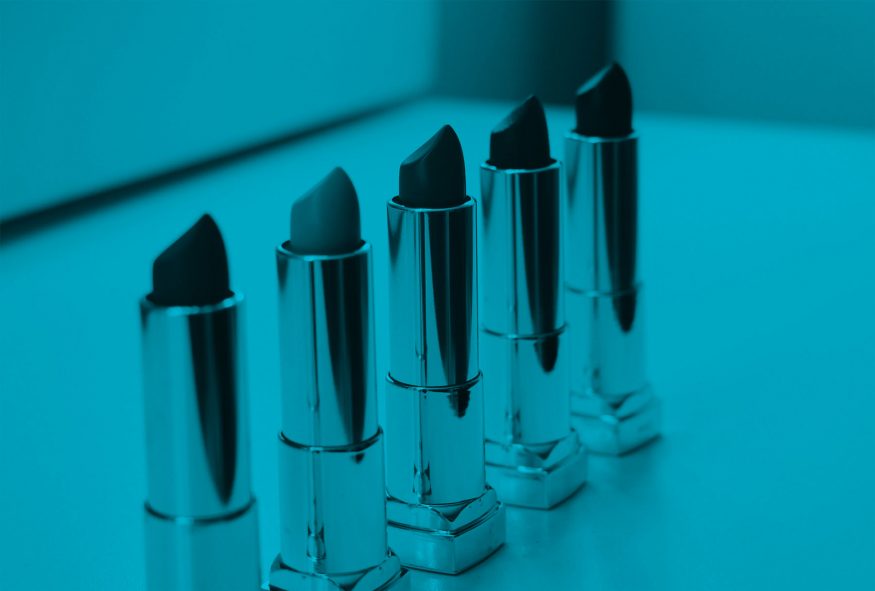
    Cheekbone Beauty is a digitally native, direct-to-consumer cosmetic brand founded by Jenn Harper, an Indigenous woman who wanted to do something to empower Indigenous youth. She had a dream where she saw Indigenous girls using lip gloss, which is when she decided to create her company. Although she had 15 years of sales and marketing experience in the food industry and 12 years of experience in the hospitality industry, Harper had no background in the beauty space. However, as she explained, “[I] had always been looking, I think my whole life, for a way to connect deeper to my Indigenous roots, my First Nations community, my family.” Initially, Harper wanted to create a charity. However, financial advisors told her that it would be better to start a business and find a charity to donate to, so in 2016 Cheekbone Beauty was born. The company is a social enterprise that operates with a purpose-driven business model: to help Indigenous youth. When customers purchase Cheekbone Beauty products, they are doing good because they are supporting a company dedicated to ensuring equal opportunities for education for Indigenous youth; feeling good about buying from a cruelty-free and environmentally friendly brand; and looking good because the makeup highlights their favourite characteristics. 

    View and download the full case study.

    [/fusion_text][fusion_text columns=”” column_min_width=”” column_spacing=”” rule_style=”default” rule_size=”” rule_color=”” content_alignment_medium=”” content_alignment_small=”” content_alignment=”” hide_on_mobile=”small-visibility,medium-visibility,large-visibility” sticky_display=”normal,sticky” class=”” id=”” margin_top=”” margin_right=”” margin_bottom=”” margin_left=”” font_size=”” fusion_font_family_text_font=”” fusion_font_variant_text_font=”” line_height=”” letter_spacing=”” text_color=”” animation_type=”” animation_direction=”left” animation_speed=”0.3″ animation_offset=””]

    __________________________

    This case was written by:

    This case was written by Ana Baseio and Victoria Sahagian. The authors prepared this case under the supervision of Professor Sarah Kaplan, with guidance from Alyson Colón, Bonnie Lam and Vanessa Serra Iarocci and research assistance from Carmina Ravanera and Riley Yesno. The authors are grateful for the participation of Jenn Harper in this project.

    [/fusion_text][fusion_separator style_type=”none” hide_on_mobile=”small-visibility,medium-visibility,large-visibility” sticky_display=”normal,sticky” class=”” id=”” flex_grow=”0″ top_margin=”10″ bottom_margin=”10″ width=”” alignment=”center” border_size=”” sep_color=”” icon=”” icon_size=”” icon_color=”” icon_circle=”” icon_circle_color=”” /][fusion_button link=”https://www.gendereconomy.org/education/case-studies/” text_transform=”” title=”” target=”_blank” link_attributes=”” alignment_medium=”” alignment_small=”” alignment=”” modal=”” hide_on_mobile=”small-visibility,medium-visibility,large-visibility” sticky_display=”normal,sticky” class=”” id=”” color=”custom” button_gradient_top_color=”#62bd19″ button_gradient_bottom_color=”#62bd19″ button_gradient_top_color_hover=”#00c2e2″ button_gradient_bottom_color_hover=”#00c2e2″ accent_color=”” accent_hover_color=”” type=”” bevel_color=”” border_color=”” border_hover_color=”” size=”” stretch=”yes” margin_top=”” margin_right=”” margin_bottom=”” margin_left=”” icon=”” icon_position=”left” icon_divider=”no” animation_type=”” animation_direction=”left” animation_speed=”0.3″ animation_offset=””]See more case studies[/fusion_button][fusion_separator style_type=”none” hide_on_mobile=”small-visibility,medium-visibility,large-visibility” sticky_display=”normal,sticky” class=”” id=”” flex_grow=”0″ top_margin=”20″ bottom_margin=”20″ width=”” alignment=”center” border_size=”” sep_color=”” icon=”” icon_size=”” icon_color=”” icon_circle=”” icon_circle_color=”” /][fusion_recent_posts layout=”default” picture_size=”fixed” hover_type=”none” columns=”3″ number_posts=”3″ post_status=”” offset=”0″ pull_by=”category” cat_slug=”case-studies” exclude_cats=”” tag_slug=”” exclude_tags=”” thumbnail=”yes” title=”yes” meta=”no” meta_author=”no” meta_categories=”no” meta_date=”yes” meta_comments=”yes” meta_tags=”no” content_alignment=”” excerpt=”no” excerpt_length=”35″ strip_html=”yes” scrolling=”no” hide_on_mobile=”small-visibility,medium-visibility,large-visibility” class=”” id=”” animation_type=”” animation_direction=”left” animation_speed=”0.3″ animation_offset=”” /][/fusion_builder_column][/fusion_builder_row][/fusion_builder_container]

  • The GIST challenges gender inequality in sports media

    The GIST challenges gender inequality in sports media

    [fusion_builder_container hundred_percent=”no” equal_height_columns=”no” menu_anchor=”” hide_on_mobile=”small-visibility,medium-visibility,large-visibility” class=”” id=”” background_color=”” background_image=”” background_position=”center center” background_repeat=”no-repeat” fade=”no” background_parallax=”none” parallax_speed=”0.3″ video_mp4=”” video_webm=”” video_ogv=”” video_url=”” video_aspect_ratio=”16:9″ video_loop=”yes” video_mute=”yes” overlay_color=”” video_preview_image=”” border_color=”” border_style=”solid” padding_top=”” padding_bottom=”” padding_left=”” padding_right=”” type=”legacy”][fusion_builder_row][fusion_builder_column type=”1_1″ layout=”1_1″ background_position=”left top” background_color=”” border_color=”” border_style=”solid” border_position=”all” spacing=”yes” background_image=”” background_repeat=”no-repeat” padding_top=”” padding_right=”” padding_bottom=”” padding_left=”” margin_top=”0px” margin_bottom=”0px” class=”” id=”” animation_type=”” animation_speed=”0.3″ animation_direction=”left” hide_on_mobile=”small-visibility,medium-visibility,large-visibility” center_content=”no” last=”true” min_height=”” hover_type=”none” link=”” border_sizes_top=”” border_sizes_bottom=”” border_sizes_left=”” border_sizes_right=”” first=”true”][fusion_text columns=”” column_min_width=”” column_spacing=”” rule_style=”default” rule_size=”” rule_color=”” content_alignment_medium=”” content_alignment_small=”” content_alignment=”” hide_on_mobile=”small-visibility,medium-visibility,large-visibility” sticky_display=”normal,sticky” class=”” id=”” margin_top=”” margin_right=”” margin_bottom=”” margin_left=”” font_size=”” fusion_font_family_text_font=”” fusion_font_variant_text_font=”” line_height=”” letter_spacing=”” text_color=”” animation_type=”” animation_direction=”left” animation_speed=”0.3″ animation_offset=””]

    Overview

    The professional sports industry is largely dominated by men, from management to media. The GIST has challenged this gender gap by creating a sports media source for the largely untapped market of women and casual sports fans who have often felt excluded from this industry that has been an old boys’ club for too long.   

    Course Topics:
    • Innovation and entrepreneurship
    • Business design 
    • Diversity and inclusion 
    • Business of sports 
    • Media industry 
    • Gender analysis  

    Introduction:

    The origin story of The GIST—a sports media start-up based in Toronto, Canada—has become the stuff of legend. Three friends, Ellen Hyslop, Jacie deHoop, and Roslyn McLarty, were chatting over dinner one night back in the winter of 2017 when conversation turned to a recent win by the Toronto Maple Leafs. Hyslop had excitedly brought up the win because it meant the team was headed to the playoffs for the first time in four years. Her friends were riveted as she spoke animatedly about the game and its ramifications, leaving the women wanting to hear more—something they did not typically feel when talking about sports. 

    It was this conversation that caused deHoop and McLarty to wonder why, despite having participated in competitive sports, their past experience had not translated into a continued passion for sport as adults.  Through researching the answer to this question, the three women found that not only are professional sports themselves male-dominated, but the industry as a whole, from management to media, is as well. They found that “less than 14% of sports journalists are women, only 4% of sports media content is dedicated to female athletes, and less than 2% of c-suite executives in major-league sports are women.” This male-focused content had persisted despite the fact that “women make up 47% of highly engaged, passionate sports fans” across a collection of thirteen of the world’s most popular sports. It was from this realisation that the idea for The GIST was born: a sports media source created by women for all those underserved fans that have not always felt sports are for them. The founders began their journey challenging the status quo of conventional sports media with a bi-weekly newsletter covering men’s and women’s sports, with an emphasis on Toronto’s professional sports teams. From these modest beginnings The GIST has expanded across North America and become a uniquely female voice leveling the playing field of an industry that has for too long been the epitome of an old boys’ club. 
    The GIST Thumbnail

    View and download the full case study.

    [/fusion_text][fusion_text columns=”” column_min_width=”” column_spacing=”” rule_style=”default” rule_size=”” rule_color=”” content_alignment_medium=”” content_alignment_small=”” content_alignment=”” hide_on_mobile=”small-visibility,medium-visibility,large-visibility” sticky_display=”normal,sticky” class=”” id=”” margin_top=”” margin_right=”” margin_bottom=”” margin_left=”” font_size=”” fusion_font_family_text_font=”” fusion_font_variant_text_font=”” line_height=”” letter_spacing=”” text_color=”” animation_type=”” animation_direction=”left” animation_speed=”0.3″ animation_offset=””]

    __________________________

    This case was written by:

    This case was written by Victoria Sahagian and Ana Baseio. The authors prepared this case under the supervision of Professor Sarah Kaplan, with guidance from Alyson Colón, Bonnie Lam and Vanessa Serra Iarocci and research assistance from Carmina Ravanera. The authors are grateful for the participation of Jacie deHoop in this project.

    [/fusion_text][fusion_separator style_type=”none” hide_on_mobile=”small-visibility,medium-visibility,large-visibility” sticky_display=”normal,sticky” class=”” id=”” flex_grow=”0″ top_margin=”10″ bottom_margin=”10″ width=”” alignment=”center” border_size=”” sep_color=”” icon=”” icon_size=”” icon_color=”” icon_circle=”” icon_circle_color=”” /][fusion_button link=”https://www.gendereconomy.org/education/case-studies/” text_transform=”” title=”” target=”_blank” link_attributes=”” alignment_medium=”” alignment_small=”” alignment=”” modal=”” hide_on_mobile=”small-visibility,medium-visibility,large-visibility” sticky_display=”normal,sticky” class=”” id=”” color=”custom” button_gradient_top_color=”#62bd19″ button_gradient_bottom_color=”#62bd19″ button_gradient_top_color_hover=”#00c2e2″ button_gradient_bottom_color_hover=”#00c2e2″ accent_color=”” accent_hover_color=”” type=”” bevel_color=”” border_width=”” border_radius=”” border_color=”” border_hover_color=”” size=”” stretch=”yes” margin_top=”” margin_right=”” margin_bottom=”” margin_left=”” icon=”” icon_position=”left” icon_divider=”no” animation_type=”” animation_direction=”left” animation_speed=”0.3″ animation_offset=””]See more case studies[/fusion_button][fusion_separator style_type=”none” hide_on_mobile=”small-visibility,medium-visibility,large-visibility” sticky_display=”normal,sticky” class=”” id=”” flex_grow=”0″ top_margin=”20″ bottom_margin=”20″ width=”” alignment=”center” border_size=”” sep_color=”” icon=”” icon_size=”” icon_color=”” icon_circle=”” icon_circle_color=”” /][fusion_recent_posts layout=”default” picture_size=”fixed” hover_type=”none” columns=”3″ number_posts=”3″ post_status=”” offset=”0″ pull_by=”category” cat_slug=”case-studies” exclude_cats=”” tag_slug=”” exclude_tags=”” thumbnail=”yes” title=”yes” meta=”no” meta_author=”no” meta_categories=”no” meta_date=”yes” meta_comments=”yes” meta_tags=”no” content_alignment=”” excerpt=”no” excerpt_length=”35″ strip_html=”yes” scrolling=”no” hide_on_mobile=”small-visibility,medium-visibility,large-visibility” class=”” id=”” animation_type=”” animation_direction=”left” animation_speed=”0.3″ animation_offset=”” /][/fusion_builder_column][/fusion_builder_row][/fusion_builder_container]

  • “The Best a Man Can Be”: Gillette and toxic masculinity

    “The Best a Man Can Be”: Gillette and toxic masculinity

    [fusion_builder_container hundred_percent=”no” equal_height_columns=”no” menu_anchor=”” hide_on_mobile=”small-visibility,medium-visibility,large-visibility” class=”” id=”” background_color=”” background_image=”” background_position=”center center” background_repeat=”no-repeat” fade=”no” background_parallax=”none” parallax_speed=”0.3″ video_mp4=”” video_webm=”” video_ogv=”” video_url=”” video_aspect_ratio=”16:9″ video_loop=”yes” video_mute=”yes” overlay_color=”” video_preview_image=”” border_color=”” border_style=”solid” padding_top=”” padding_bottom=”” padding_left=”” padding_right=”” type=”legacy”][fusion_builder_row][fusion_builder_column type=”1_1″ layout=”1_1″ background_position=”left top” background_color=”” border_color=”” border_style=”solid” border_position=”all” spacing=”yes” background_image=”” background_repeat=”no-repeat” padding_top=”” padding_right=”” padding_bottom=”” padding_left=”” margin_top=”0px” margin_bottom=”0px” class=”” id=”” animation_type=”” animation_speed=”0.3″ animation_direction=”left” hide_on_mobile=”small-visibility,medium-visibility,large-visibility” center_content=”no” last=”true” min_height=”” hover_type=”none” link=”” border_sizes_top=”” border_sizes_bottom=”” border_sizes_left=”” border_sizes_right=”” first=”true”][fusion_text columns=”” column_min_width=”” column_spacing=”” rule_style=”default” rule_size=”” rule_color=”” content_alignment_medium=”” content_alignment_small=”” content_alignment=”” hide_on_mobile=”small-visibility,medium-visibility,large-visibility” sticky_display=”normal,sticky” class=”” id=”” margin_top=”” margin_right=”” margin_bottom=”” margin_left=”” font_size=”” fusion_font_family_text_font=”” fusion_font_variant_text_font=”” line_height=”” letter_spacing=”” text_color=”” animation_type=”” animation_direction=”left” animation_speed=”0.3″ animation_offset=””]

    Overview

    Gillette’s 2019 ad campaign and corporate giving initiative, “The Best a Man Can Be”, aimed to tackle toxic masculinity. It was met with strong reactions of both backlash and supportWhat led Gillette, the king of masculine brands, to create campaign intended to spark conversations about this topic? Was it a flop or a success? 

    Course Topics:
    • Marketing
    • Gender Analysis
    • Diversity and inclusion in business
    • Corporate social responsibility  

    Introduction:

    January 13, 2019 is a day that razor brand Gillette’s executives will not soon forget. It was on this day that the 100-year-old brand released a 1-minute-and-48-second short film entitled “We Believe: The Best Men Can Be”. Filled with references to toxic masculinity, bullying, and sexual harassment, the video directly confronts social issues brought to the forefront of public consciousness by the #MeToo movement in October 2017, two years prior to its release. Gillette had intended for the film to serve as an advertisement promoting the launch of their new corporate giving initiative “The Best a Man Can Be,” a three-year commitment to donate $1 million per year “to non-profit organizations executing the most interesting and impactful programs designed to help men of all ages achieve their personal best.”  However, rather than widespread public adulation for a campaign designed to support men—Gillette’s core consumer base—in tackling complex social issues, the video’s release was met with a mixed reaction including, initially, an overwhelmingly negative response on social media, where many claimed they would never purchase Gillette products again. Despite receiving praise for the video and “The Best a Man Can Be” campaign overall, the social media backlash made Gillette’s decision appear to the causal viewer to be a massive misstep. Had the century-old, market-leading razor company entirely misunderstood their target customer? In the aftermath of the “We Believe” video’s release, two questions come to mind: What led Gillette, the king of masculine brands, to decide to create a video intended to spark productive and long overdue conversations about toxic masculinity and sexual harassment? And, was the campaign really a flop?       

    View and download the full case study.

    [/fusion_text][fusion_text columns=”” column_min_width=”” column_spacing=”” rule_style=”default” rule_size=”” rule_color=”” content_alignment_medium=”” content_alignment_small=”” content_alignment=”” hide_on_mobile=”small-visibility,medium-visibility,large-visibility” sticky_display=”normal,sticky” class=”” id=”” margin_top=”” margin_right=”” margin_bottom=”” margin_left=”” font_size=”” fusion_font_family_text_font=”” fusion_font_variant_text_font=”” line_height=”” letter_spacing=”” text_color=”” animation_type=”” animation_direction=”left” animation_speed=”0.3″ animation_offset=””]

    __________________________

    This case was written by:

    This case was written by Victoria Sahagian and Ana Baseio. The authors prepared this case under the supervision of Professor Sarah Kaplan, with guidance from Alyson Colón, Bonnie Lam and Vanessa Serra Iarocci and research assistance from Carmina Ravanera.

    [/fusion_text][fusion_separator style_type=”none” hide_on_mobile=”small-visibility,medium-visibility,large-visibility” sticky_display=”normal,sticky” class=”” id=”” flex_grow=”0″ top_margin=”10″ bottom_margin=”10″ width=”” alignment=”center” border_size=”” sep_color=”” icon=”” icon_size=”” icon_color=”” icon_circle=”” icon_circle_color=”” /][fusion_button link=”https://www.gendereconomy.org/education/case-studies/” text_transform=”” title=”” target=”_blank” link_attributes=”” alignment_medium=”” alignment_small=”” alignment=”” modal=”” hide_on_mobile=”small-visibility,medium-visibility,large-visibility” sticky_display=”normal,sticky” class=”” id=”” color=”custom” button_gradient_top_color=”#62bd19″ button_gradient_bottom_color=”#62bd19″ button_gradient_top_color_hover=”#00c2e2″ button_gradient_bottom_color_hover=”#00c2e2″ accent_color=”” accent_hover_color=”” type=”” bevel_color=”” border_color=”” border_hover_color=”” size=”” stretch=”yes” margin_top=”” margin_right=”” margin_bottom=”” margin_left=”” icon=”” icon_position=”left” icon_divider=”no” animation_type=”” animation_direction=”left” animation_speed=”0.3″ animation_offset=””]See more case studies[/fusion_button][fusion_separator style_type=”none” hide_on_mobile=”small-visibility,medium-visibility,large-visibility” sticky_display=”normal,sticky” class=”” id=”” flex_grow=”0″ top_margin=”20″ bottom_margin=”20″ width=”” alignment=”center” border_size=”” sep_color=”” icon=”” icon_size=”” icon_color=”” icon_circle=”” icon_circle_color=”” /][fusion_recent_posts layout=”default” picture_size=”fixed” hover_type=”none” columns=”3″ number_posts=”3″ post_status=”” offset=”0″ pull_by=”category” cat_slug=”case-studies” exclude_cats=”” tag_slug=”” exclude_tags=”” thumbnail=”yes” title=”yes” meta=”no” meta_author=”no” meta_categories=”no” meta_date=”yes” meta_comments=”yes” meta_tags=”no” content_alignment=”” excerpt=”no” excerpt_length=”35″ strip_html=”yes” scrolling=”no” hide_on_mobile=”small-visibility,medium-visibility,large-visibility” class=”” id=”” animation_type=”” animation_direction=”left” animation_speed=”0.3″ animation_offset=”” /][/fusion_builder_column][/fusion_builder_row][/fusion_builder_container]