Category: Multimedia

  • Deconstructing Occupational Stereotypes

    Deconstructing Occupational Stereotypes

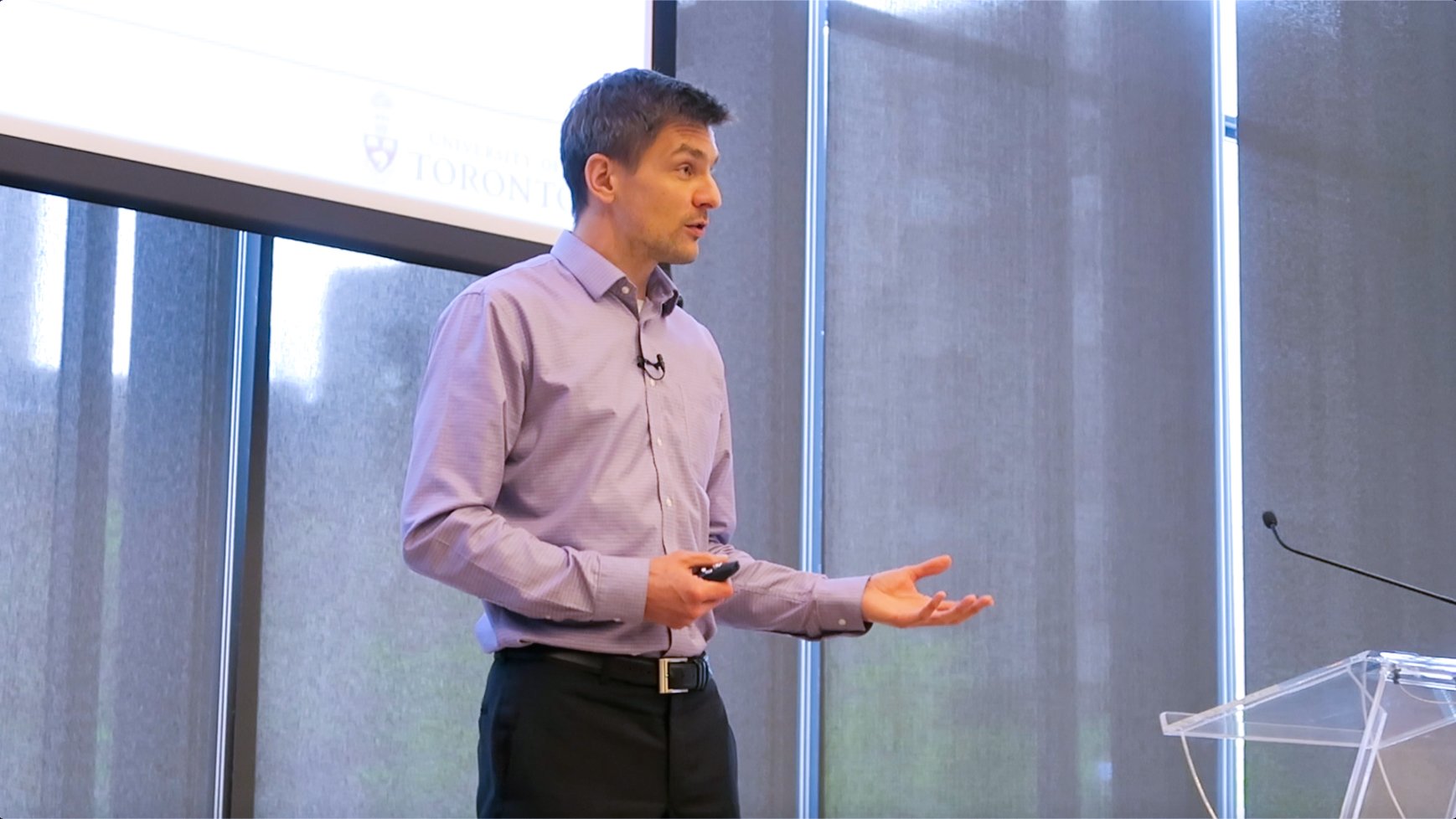
    [fusion_builder_container hundred_percent=”no” equal_height_columns=”no” menu_anchor=”” hide_on_mobile=”small-visibility,medium-visibility,large-visibility” class=”” id=”” background_color=”” background_image=”” background_position=”center center” background_repeat=”no-repeat” fade=”no” background_parallax=”none” parallax_speed=”0.3″ video_mp4=”” video_webm=”” video_ogv=”” video_url=”” video_aspect_ratio=”16:9″ video_loop=”yes” video_mute=”yes” overlay_color=”” video_preview_image=”” border_color=”” border_style=”solid” padding_top=”” padding_bottom=”” padding_left=”” padding_right=”” type=”legacy”][fusion_builder_row][fusion_builder_column type=”1_1″ layout=”1_1″ background_position=”left top” background_color=”” border_color=”” border_style=”solid” border_position=”all” spacing=”yes” background_image=”” background_repeat=”no-repeat” padding_top=”” padding_right=”” padding_bottom=”” padding_left=”” margin_top=”0px” margin_bottom=”0px” class=”” id=”” animation_type=”” animation_speed=”0.3″ animation_direction=”left” hide_on_mobile=”small-visibility,medium-visibility,large-visibility” center_content=”no” last=”true” min_height=”” hover_type=”none” link=”” border_sizes_top=”” border_sizes_bottom=”” border_sizes_left=”” border_sizes_right=”” first=”true”][fusion_text columns=”” column_min_width=”” column_spacing=”” rule_style=”” rule_size=”” rule_color=”” hue=”” saturation=”” lightness=”” alpha=”” content_alignment_medium=”” content_alignment_small=”” content_alignment=”” hide_on_mobile=”small-visibility,medium-visibility,large-visibility” sticky_display=”normal,sticky” class=”” id=”” margin_top=”” margin_right=”” margin_bottom=”” margin_left=”” fusion_font_family_text_font=”” fusion_font_variant_text_font=”” font_size=”” line_height=”” letter_spacing=”” text_transform=”” text_color=”” animation_type=”” animation_direction=”left” animation_color=”” animation_speed=”0.3″ animation_delay=”0″ animation_offset=”” logics=””]Speaking at Rotman Management Magazine’s “Creative Destruction” event in February 2020, Sonia Kang, Faculty Research Fellow, Institute for Gender and the Economy, Rotman School of Management, discusses her research on deconstructing occupational stereotypes.

    [/fusion_text][/fusion_builder_column][/fusion_builder_row][/fusion_builder_container]
  • Sarah Kaplan on “Marketing Masculinity” in The Coup

    Sarah Kaplan on “Marketing Masculinity” in The Coup

  • Run it Like a Girl with Dr. Sarah Kaplan

    Run it Like a Girl with Dr. Sarah Kaplan

    Sarah Kaplan was featured in an episode of Run it Like a Girl, a podcast featuring the stories of women leaders from different fields and industries. The episode focused on why Dr. Kaplan decided to found the Institute for Gender and the Economy, why we haven’t made more progress on gender equality challenges, and some concrete actions for moving forward.

    Listen to the full episode here.

    Learn more about Sarah Kaplan here.

  • BEAR x BIOrg Webinar Series: Designing for Equality—5 Myths and 5 Solutions

    BEAR x BIOrg Webinar Series: Designing for Equality—5 Myths and 5 Solutions

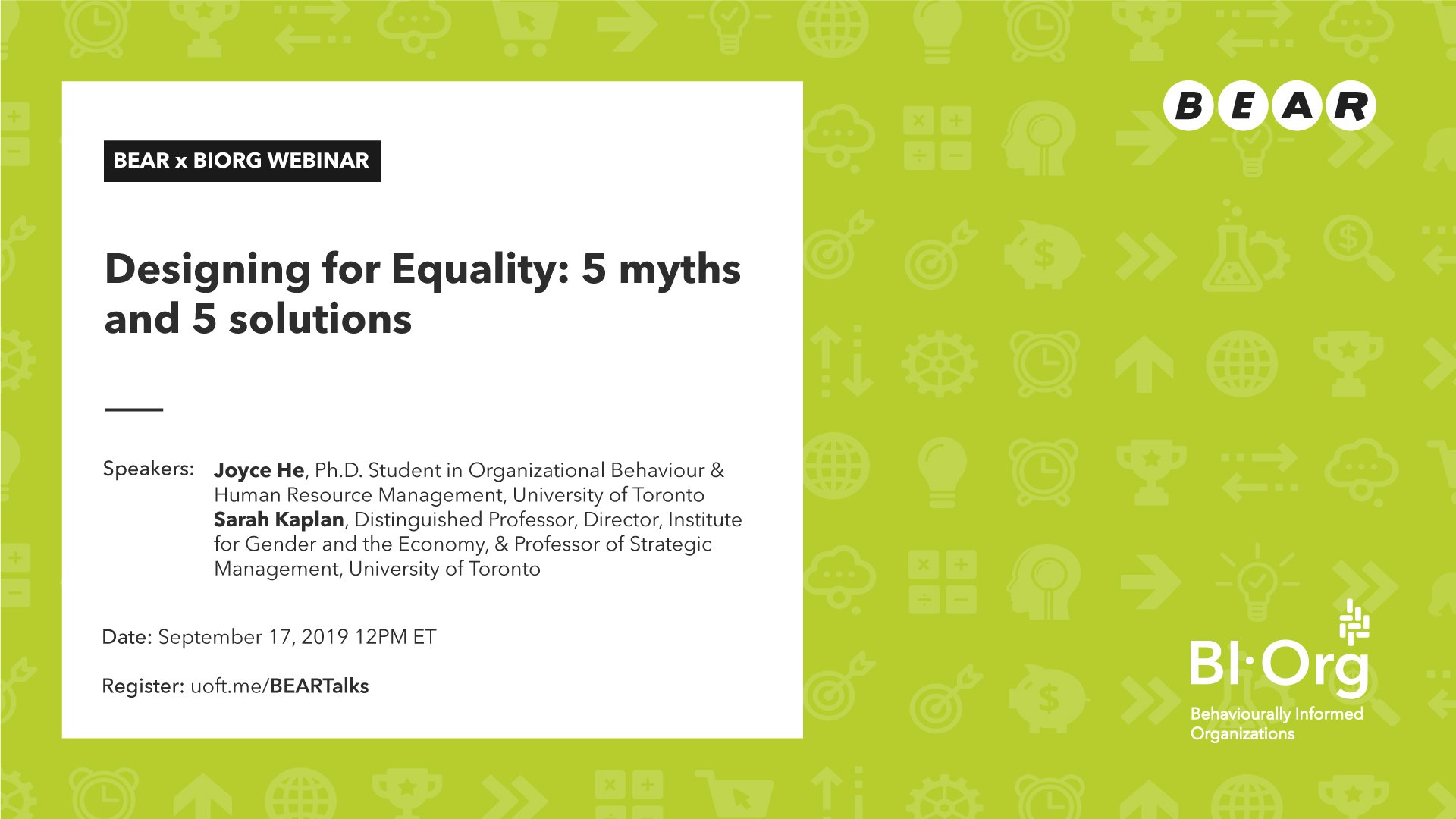
    In a webinar hosted by Behavioural Economics in Action at Rotman (BEAR) on September 17, 2019, Joyce He and Sarah Kaplan of the University of Toronto’s Institute for Gender and the Economy used insights from scholarly research to shed light on how to achieve gender equality.

    Statistics show that women are still substantially underrepresented in many professions, such as in STEM occupations. This webinar explains five myths that surround conversations around gender equality in the workplace, such as the myth that under-representation of women is a “pipeline problem”, and the myth that promoting diversity contravenes meritocracy. It then discusses five solutions based on behavioural approaches, including creating a culture in which people feel personally responsible for change, and implementing behavioural guidelines and action plans.

    A replay of the webinar:

    Click here for more information on Joyce He, and here for more information on Sarah Kaplan.

  • The origins of the gender gap

    The origins of the gender gap

    Speaking at Rotman Management Magazine’s “Short Talks: Art of Change” event in May 2019, Mikhail Simutin, Associate Professor of Finance and Associate Director of the International Centre for Pension Management at Rotman, discusses his GATE-funded research on the origins of the gender gap.

    Click here to view Sarah Kaplan’s talk at “Art of Change.”


  • Inequality as an innovation challenge

    Inequality as an innovation challenge

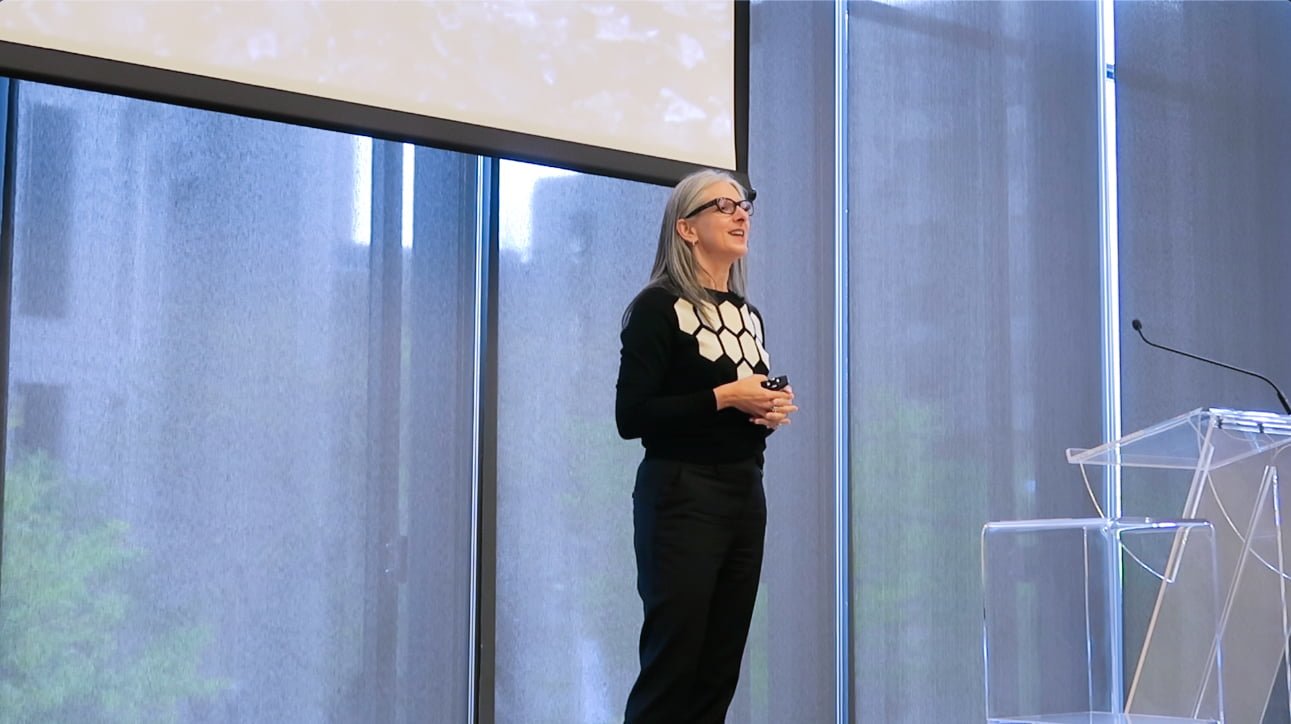
    Speaking at Rotman Management Magazine’s “Short Talks: Art of Change” event in May 2019, Sarah Kaplan discusses her latest book, The 360° Corporation: From Stakeholder Trade-offs to Transformation, and how businesses can approach inequality as an innovation challenge.

    Click here to view GATE-funded researcher Mikhail’s Simutin’s talk at “Art of Change.”
  • The uses and abuses of storytelling

    The uses and abuses of storytelling

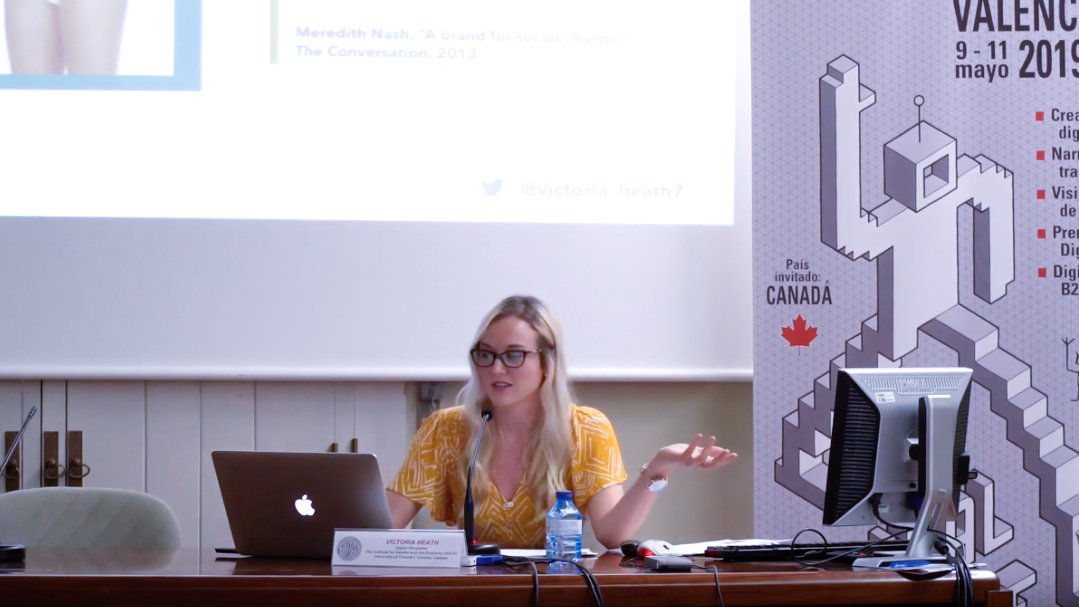
    Speaking at Digital Jove, a conference in Spain for digital creatives, Victoria Heath (GATE’s Digital Storyteller) examines the uses and abuses of storytelling and explains how we can be more responsible storytellers in the world of education and activism, particularly in regards to gender and diversity. In this presentation, she discusses a variety of storytelling examples from politics, education, advertising, and the news, and outlines six ways to tell stories more responsibly:

    1. Draw from truth and have integrity
    2. Understand your positionality and check your narrative
    3. Aim to change behaviour, not attitudes
    4. Provoke empathy, but give viewers a responsible action to take
    5. The narrative should frame the data, not the other way around
    6. Value your audience and engage with them
    Watch or listen to the full presentation below.


  • Rebooting the gender equality conversation

    Rebooting the gender equality conversation

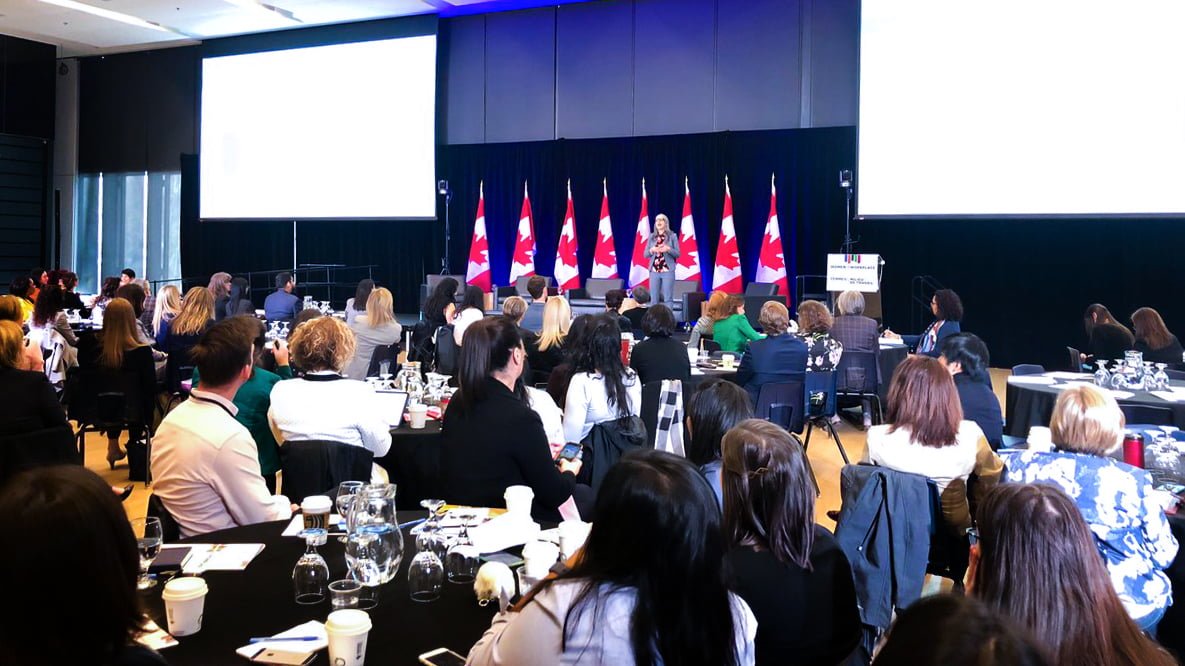
    In May 2019, the Rotman School of Management hosted the Women and the Workplace Symposium, a two-day event funded by the Government of Canada’s Labour Program. The symposium brought together leaders and champions of workplace diversity from across Canada to share tools and best practices employers need to advance women in the workforce and participate in an ongoing dialogue.

    In the video below, GATE Director Sarah Kaplan busts five myths regarding women in the workplace and outlines actions organizations and governments can take to achieve progress towards gender equality.

    The myths include:
    1. Promoting diversity contravenes meritocracy
    2. Gender career gaps are a product of “choice”
    3. We have to “fix the women”
    4. Controlling bias is about changing individuals
    5. Focusing on large corporations will change the game

    To learn more, check out the research briefs and infographics prepared by GATE as the #Womenintheworkplace Symposium Knowledge Partner, here.
  • Covering in the workplace: A series by Narjis Premjee

    Covering in the workplace: A series by Narjis Premjee

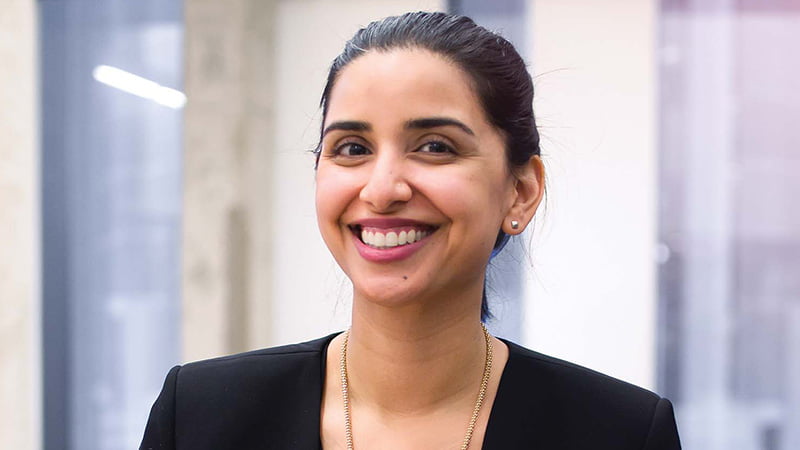
    “Covering” refers to the ways in which a person conceals certain aspects of their identity in public due to a fear of backlash, discrimination, and/or bias. In this podcast, MBA Student Fellow Narjis Premjee interviews people who have covered or uncovered certain aspects of their identity in the workplace, such as their religion, ethnicity, marital status, disabilities, or sexual orientation.

    In this podcast, MBA Student Fellow Narjis Premjee interviews individuals who have covered or uncovered certain aspects of their identity in the workplace, such as their religion, ethnicity, marital status, disabilities, and sexual orientation.

    Listen on Spotify, Apple Podcasts

    Episode 1— Carolyn on defining “covering” at work

    Episode 1 show notes

    Episode 2 — Sean on covering his conversion to Islam

    Episode 2 show notes

    Episode 3 – Anonymous on covering her Jewish faith, marital status, and curly hair

    Episode 3 show notes

    Episode 4 — Marco on covering his sexual orientation

    Episode 4 show notes

    Episode 5 — Priyanka on covering her gender and ethnicity

    Episode 5 show notes

    Episode 6 — Osama on covering his Islamic faith

    Episode 6 show notes

    Episode 7 — Marko on covering his disabilities

    Episode 7 show notes

    Episode 8 — Aamer on covering his Islamic faith

    Episode 8 show notes

    About this series: 

    This podcast was supported by the Institute for Gender and the Economy (GATE) as part of the MBA Student Fellows program, which seeks to engage students in advancing the agenda on gender equality. Find out more here. 

    Learn more about the creator of this series, Narjis Premjee, here. 

    This podcast was edited by Victoria Heath, Mohammad Taqi Premjee and Narjis Premjee. A special thanks to Sarah Kaplan, Victoria Heath, Alyson Colón, Bonnie Lam and all interviewees that took part in this podcast.

    *Disclaimer: This podcast series was prepared by Narjis Premjee, and the opinions expressed in this series are her own and do not necessarily reflect the views of the Institute for Gender and the Economy or the University of Toronto.

    DID YOU LIKE THIS?
    FIND GATE’S OTHER AUDIO AND PODCAST SERIES AND BE SURE TO FOLLOW US ON TWITTERLINKEDIN, AND YOUTUBE FOR MORE KEY INSIGHTS AND RESOURCES.
  • A new model: Gender equality as an innovation challenge

    A new model: Gender equality as an innovation challenge

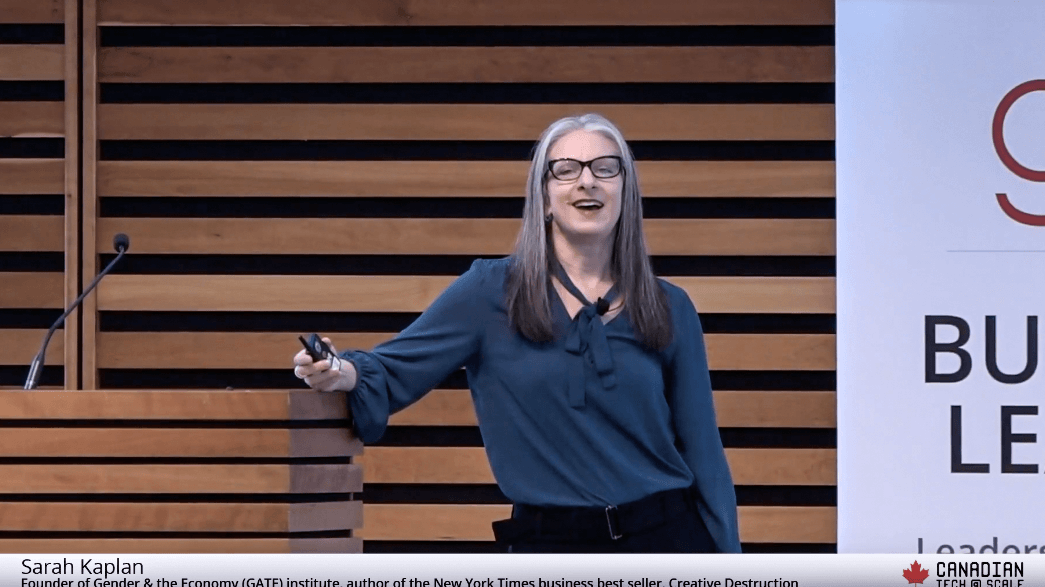
    Speaking at Canadian Tech@Scale, Sarah Kaplan argues for a Canadian–more inclusive–model of innovation ecosystems and superclusters. A model that deviates from the Silicon Valley model and the systemic inequalities it has yet to successfully address.

    DID YOU LIKE THIS VIDEO? FOLLOW US ON TWITTERLINKEDIN, AND YOUTUBE FOR MORE, AND SIGN UP FOR OUR MONTHLY NEWSLETTER.</a